
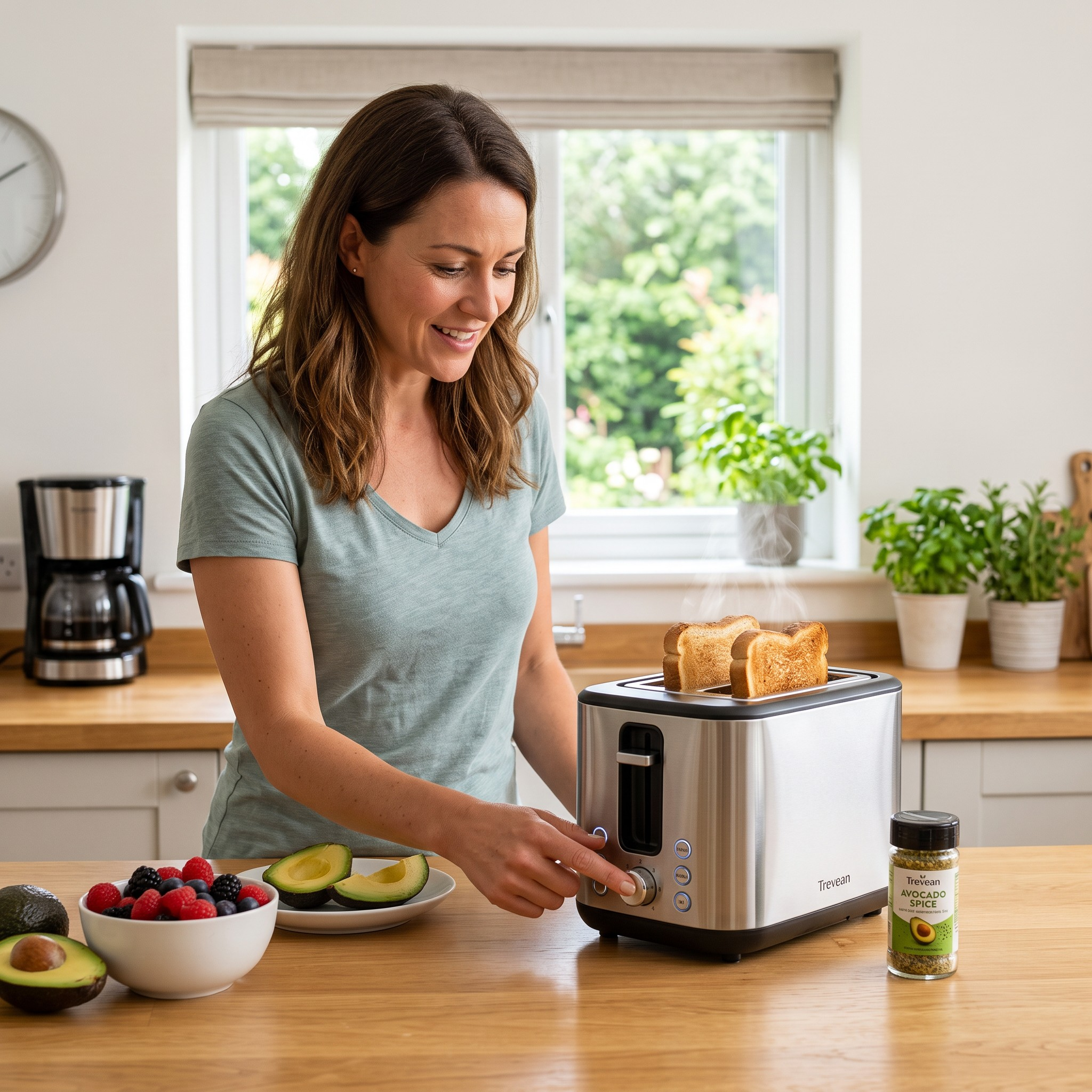

A toaster should make toast. It should not demand an email address, require a software update, or ask whether you would like to receive “helpful offers” before breakfast.
That frustration is captured perfectly in the Rural Revolution post, “My toaster wants my email address”. It describes a world in which simple activities—parking a car, reading a menu or operating an appliance—have become obstacle courses of QR codes, app downloads, account creation and permission requests.
The problem is not technology itself. The problem is technology that makes the customer do more work.
At Trevean Spice, we believe connected devices can make the kitchen more efficient. But that will only happen if we design technology around how people actually cook, shop, and live.
When “smart” becomes an inconvenience
Too many connected products begin with the needs of the company rather than those of the customer.
The company wants an account. The marketing team wants an email address. The product team wants more engagement. The data team wants another stream of information.
So the customer is presented with a succession of prompts:
Create an account. Verify your email. Download the app. Accept the terms. Enable notifications. Complete your profile. Choose your preferences.
All this before the product has provided any value.
Each request may make sense inside the company. Together, they create a poor customer experience. The user is left wondering why a device designed to save time is already consuming it.
Convenience cannot be measured by how efficiently a company collects information. It must be measured by how easily the customer accomplishes what they came to do.
The kitchen is not another screen
The kitchen is a particularly important place to get this right.
Cooking is physical, time-sensitive and often messy. People have wet hands, several pans on the stove and family members asking when dinner will be ready. They do not need another screen demanding attention.
Useful kitchen technology should reduce decisions and interruptions. It might quietly help someone understand what is in the pantry, remember when an ingredient is running low, reduce food waste or make it easier to plan a meal.
Most of that assistance should happen behind the scenes.
The goal is not to make people interact with technology more often. The goal is to help them move through the kitchen with less friction.
That distinction matters. A connected pantry should not feel like another piece of software to administer. It should feel like a well-organized kitchen that happens to be more helpful.
Assistance should come before engagement
The technology industry often treats engagement as a universal measure of success. More logins, more taps and more time in an app are interpreted as signs that a product is working.
In the kitchen, the opposite may be true.
A connected device may be most successful when the customer barely notices it. It performs its role reliably, offers assistance at the right moment and then gets out of the way.
That means designing for:
- Immediate usefulness before account creation
- Guest and household use without individual profiles
- Clear choices about what information is collected
- Notifications only when they are timely and actionable
- Simple controls that work even when a phone is unavailable
- Continued core functionality if the internet connection fails
- Easy export, deletion and ownership of customer data
An account may sometimes be necessary, particularly when information must be securely synchronized across devices. But it should never be a reflex. Companies should be able to explain what the signup enables, why the requested information is needed and what the customer receives in return.
If they cannot, they should remove it.
Knowing your customer means respecting their attention
“Know your customer” is often interpreted as an instruction to collect more data. We believe it should begin with something more fundamental: understand the customer’s context.
Are they cooking while caring for children? Are they trying to reduce household waste? Are they managing dietary restrictions? Do they live in an area with unreliable connectivity? Are they comfortable with connected devices, or does every new setup process feel like another technology gap they must cross?
Knowing the customer means recognizing that not everyone wants to become a systems administrator for their home.
It also means respecting the difference between assistance and intrusion. A timely reminder that a staple ingredient is running low may be useful. Requiring an account to open a recipe is not. Helping a household avoid duplicate purchases creates value. Turning every interaction into a marketing opportunity destroys trust.
Good technology earns a place in the kitchen through usefulness, not persistence.
Building a more human connected pantry
At Trevean Spice, we are exploring technologies that can assist rather than hinder the customer experience. Our ambition is to help bridge the technology gap between today’s pantry and a more connected, efficient kitchen.
But connection is not the objective by itself.
The real objective is a kitchen that is easier to manage: one where ingredients are more visible, planning requires less effort and technology works quietly in service of the people using it.
That requires restraint. It means asking whether every prompt, notification and signup is genuinely necessary. It means giving customers control without forcing them to configure every detail. And it means remembering that the most sophisticated experience may also be the simplest one.
The future of the connected kitchen should not be a toaster asking for your email address.
It should be technology that understands what it is there to do, does it well—and lets you get on with breakfast.
Leave a Reply