
Product Strategy
-

How the Supply Chain Made My $1,500 Labels Instantly Obsolete
TL;DR: A sourcing change made part of our Persian Sunrise story inaccurate after we had already spent $1,500 on printed labels. Printing turned a changing detail into inventory. Before approving packaging, check how long each claim will stay true and how hard it will be to fix if it changes. Last Friday, I opened the…
-

The Best Smart Kitchen Technology Should Almost Disappear
Connected kitchen technology should reduce work, not create more prompts. Trevean Spice explores a simpler, more human connected pantry.
-

Roadmaps are dead; try telling that to one thousand printed NFC tags.
TL;DR: In a nutshell, product management is shifting towards principles, outcomes, and the use of cheap AI experiments, and this approach works very well when the product can be altered tomorrow. However, it is less effective when tomorrow begins with a thousand printed NFC tags lying on your desk. Roadmaps are not obsolete; rather, they…
-
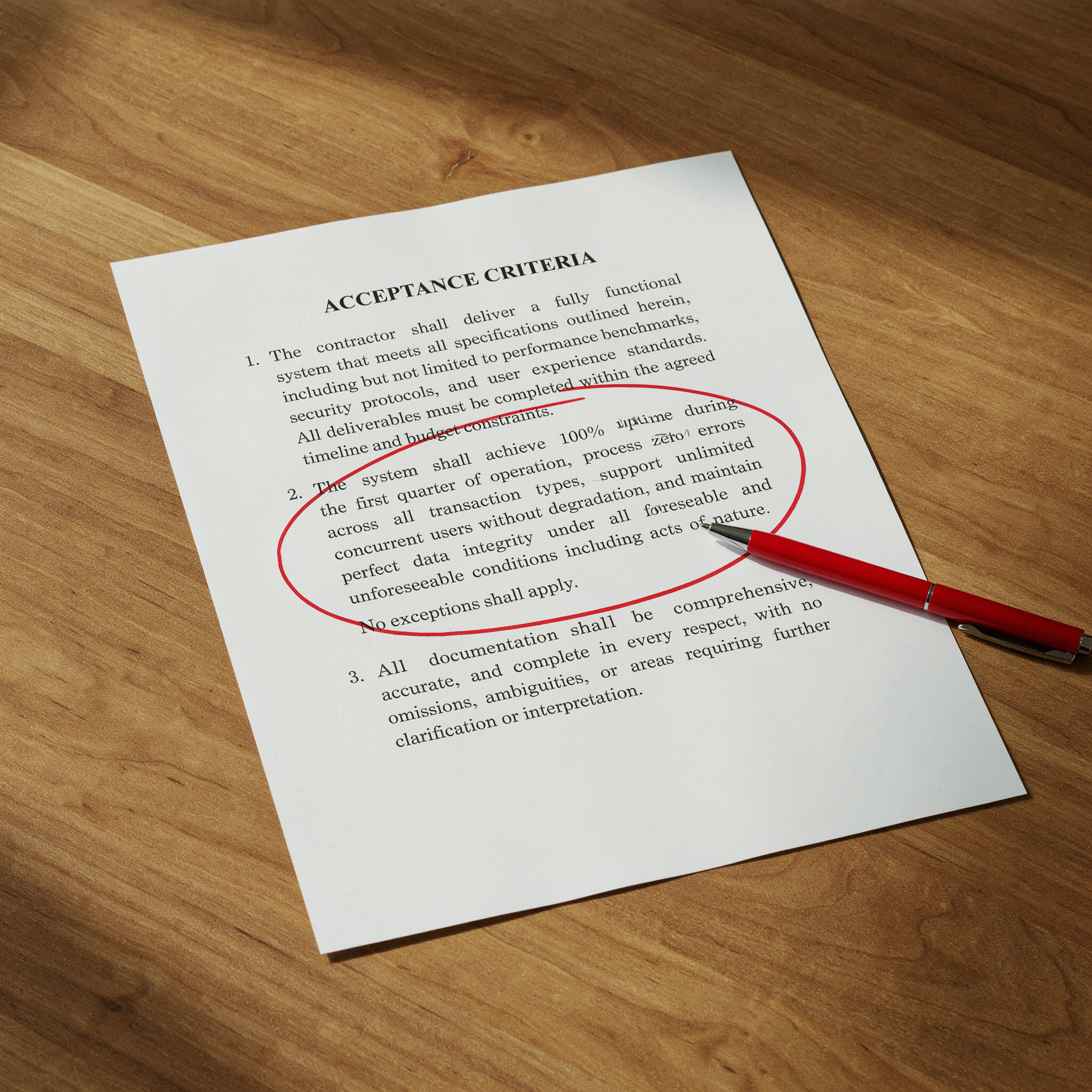
Name the Cause Before You Name the Price: The Acceptance Criterion Nobody Could Have Passed
TL;DR: I wrote an acceptance criterion for a contractor I hadn’t hired yet, and it was specific, binary, and testable. It was also impossible, because one of the three possible causes of the bug I wanted fixed is operating-system behavior nobody can change. Specific and testable is two-thirds of the job; the missing third is…
-

Stop Asking AI to Decide. Make It Set the Defaults Instead.
TL;DR: Most product reviews are good at spotting stuck decisions and terrible at moving them. The fix is a Decision SLA: every open decision gets a written deadline and a default that fires automatically if the deadline passes. It turns your review from something that watches problems into something that ends them. Below are the…
-

What the next 100 posts are for
TL;DR A milestone tempts you to celebrate the number and then re-run the same streak. I did something else with the journal after post 100: I redefined what the next hundred are for. Three moves you can run on any recurring output you own, whether posts, releases, or weekly updates. Widen the surface past the…
-

I’m the founder. I have all the authority. It barely helped.
TL;DR: Product managers are told their core problem is ownership without authority: you own the outcome but don’t control the levers. I run a company, I have every lever and the final say on everything, and the outcomes I care about still don’t move on command. Authority buys the right to decide, not the ability…
-

I knew on day one. I just didn’t want to admit it.
TL;DR: Yesterday’s post diagnosed a hidden bottleneck: four co-packers stalled on a decision I’d parked, not a delay they owned, with a clean three-question check to find it. Here’s the honest follow-up. I didn’t need the diagnosis. I knew on day one that sourcing those three ingredients was mine to settle. The nine days of…
-

The bottleneck wasn’t the vendor. It was a decision I parked.
TL;DR: I spent nine days chasing four co-packers for a written quote; sure, they were the holdup. They were all stuck with the same condition: only three ingredients, and I could decide how to source them. The real bottleneck was a decision sitting in my own queue. When a dependency won’t move, run the Stall…
-

Your moat is the part you can’t demo
I built my product around a feature the market just commoditized. Here’s the test I use now to tell a moat from table stakes, before I fall for the next demo.
-
Stop tuning the prompt. Your AI agent needs a contract.
I built an agent to run my content engine. The prompt took an afternoon. The contract is what made it safe to hand off real work.