
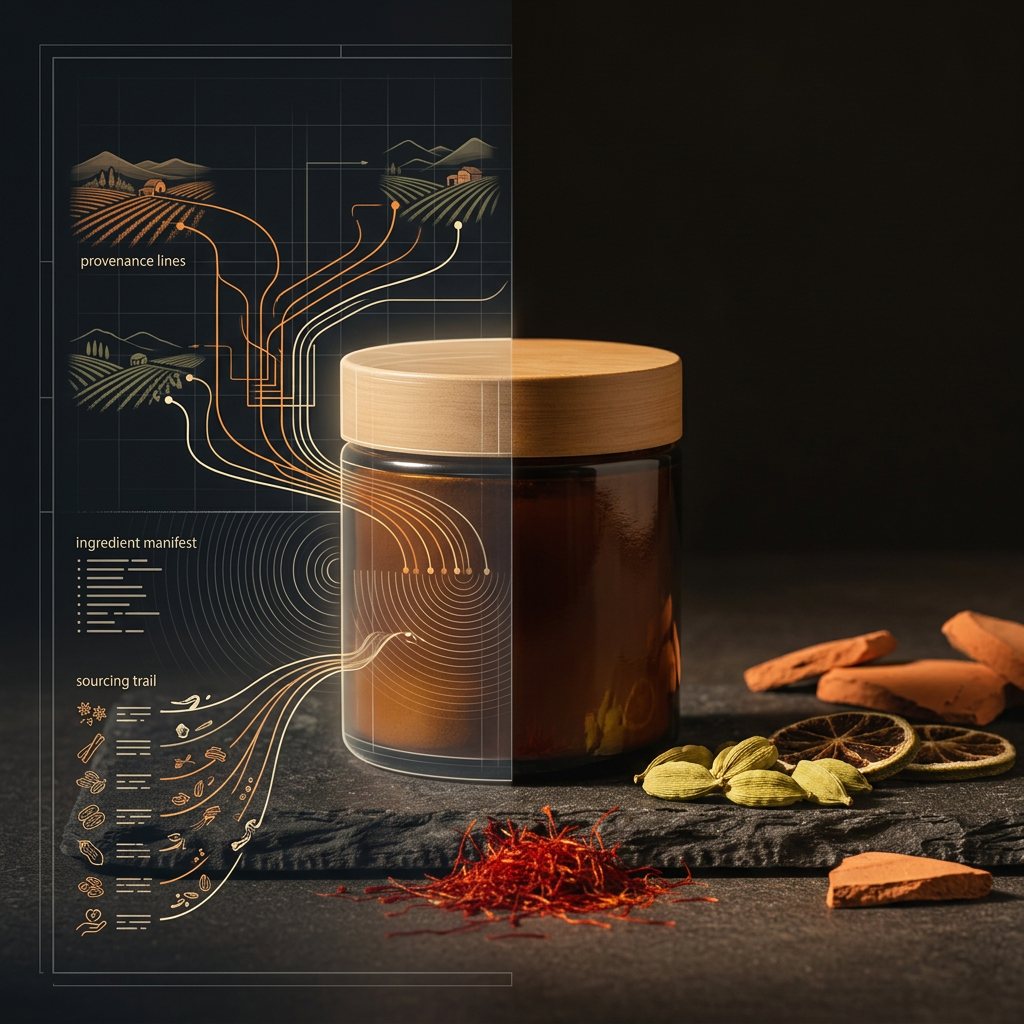
Imagine if every packaged food told you exactly where its ingredients came from, what was done to them, and when the recipe changed. We would not just have better labels; we would see a whole new kind of food market.
What would the audit reveal?
TL;DR
The packaged-food industry relies on an information gap. Manufacturers know each product’s recipe, suppliers, substitutions, processing methods, margins, and shelf-life strategy. Shoppers see only a shiny package and a label that meets legal requirements.
Now picture applying open-source ideas to food: a public list of ingredients, proof of where they came from, details on processing, a record of recipe changes, and product data anyone can check or use. This would benefit honest manufacturers, small retailers, developers, chefs, and consumers who want more control over their food. The biggest complaints would come from companies that rely on keeping ingredients secret, hiding how products are made, and assuming shoppers will not dig deeper than the label.
This is the main idea behind Trevean: the package should not be where your experience with a product ends. Instead, it should open the door to everything behind it—and connect it to the pantry.
The Most Important Ingredient in Packaged Food Is Information
This is a continuation of yesterday’s essay, The Best Smart Kitchen Technology Should Almost Disappear.
When you walk through a grocery store, almost every package tries to tell you a story.
The tomatoes are said to have grown under the Italian sun; the granola is pictured by a mountain lake. The chicken is shown on a farm that looks more like a movie set. The spice blend is “inspired” by a place, but the real farmers and traditions are never named.
Packages give you a clear feeling but leave out the real facts.
That is not a mistake. It is done on purpose.
Today’s packaged-food market is based on an odd deal: producers know nearly everything about their products, while consumers get only enough information to make a purchase. We see an ingredient list, nutrition data, some certifications, an expiration date, and the story the brand wants to tell. We almost never see details such as the farm, harvest date, batch, age, processing method, ingredient substitutions, chain of ownership, or reason the recipe changed.
In the software world, this would not be called open. It would be called a black box.
But what if food did not have to be a black box?
What “Open Source” Would Mean for Food
Open-source food does not mean sharing your secret recipe and letting anyone make it poorly. Brands can still protect their unique recipes, trademarks, and special touches while sharing the facts about their products.
The point is not to give away the secret sauce, but to make the whole system open to inspection.
An open food product could include:
- A machine-readable ingredient manifest, not merely a line of small type
- The origin of each meaningful ingredient, including farm, cooperative, or region when available
- Harvest, milling, blending, packing, and best-use dates
- Processing methods and a plain-language explanation of why each additive is present
- Lot-level testing, certifications, and safety documentation
- A public change log showing reformulations and supplier substitutions
- Packaging materials, recyclability, and refill options
- A stable digital identity that persists after the package leaves the shelf
- An open data layer that shoppers, retailers, researchers, and developers can use—with appropriate privacy and security controls
None of these ideas requires speculative technology. The FDA’s food traceability framework already pushes parts of the supply chain toward standardized records for certain foods, even though enforcement has been deferred to July 20, 2028. GS1 Digital Link can connect a physical product to online, brand-authorized product information through a two-dimensional barcode. Open Food Facts already demonstrates what becomes possible when ingredient and nutrition data are treated as reusable public infrastructure rather than trapped on individual labels.
All the parts already exist. What we need is a way of thinking that brings them together for consumers.
The Grocery Aisle After the Black Box Opens
If this became normal, the CPG market would reorganize around a new competitive variable: provability.
Right now, two products can look the same on the shelf but have very different sources, ages, recipes, and processing histories. Shoppers are left to compare marketing claims. With an open pantry, they could compare real evidence instead.
“Natural” would have to compete with a visible process.
“Premium” would have to compete with named growers, harvest dates, and handling practices.
“Sustainable” would have to compete with packaging data, refill behavior, and a traceable chain of custody.
“Authentic” would have to compete with actual origin.
Shelf space would still matter. Brand would still matter. Taste would still win repeat purchases. But trust could become portable. A small producer with strong evidence could challenge a large company with great distribution.
That changes who holds power.
Farmers could become visible participants in the value proposition rather than anonymous cost inputs. Retailers could verify claims and build smarter assortments. Consumers could filter for the things they actually care about: fewer additives, shorter supply chains, regenerative practices, allergen controls, labor standards, freshness, or simply ingredients they recognize.
Developers could build the food equivalent of browser extensions: tools that compare formulations, flag unannounced changes, recommend substitutions, calculate pantry freshness, or translate a technical label into plain language. Researchers could study the market using structured data instead of scraping marketing copy. A recall could become more targeted because products could be resolved by lot rather than treated as undifferentiated inventory.
Most importantly, food literacy would no longer depend on whether someone has twenty spare minutes to decode a package under fluorescent lights.
Ultra-Processed Food Thrives in the Distance Between Label and Product
The case for transparency is not that every processed food is harmful or that processing itself is the enemy. Freezing, fermenting, grinding, canning, blending, and cooking are all forms of processing. They can improve safety, nutrition, access, and pleasure.
The problem is loss of agency.
Ultra-processed products often arrive as finished systems: convenient, intensely palatable, heavily marketed, and difficult to mentally reconstruct as food. The consumer is encouraged to evaluate the promise on the front of the package rather than the industrial logic behind it.
That matters. In a controlled NIH study, participants eating an ultra-processed diet consumed about 500 more calories per day and gained around two pounds over two weeks. The same participants lost a similar amount during the unprocessed phase, even though the diets were matched for several nutrients. One study does not answer every question about ultra-processed food, but it challenges the idea that all calories and food structures behave the same way in the real world.
Transparency would not ban ultra-processed products. It would make their design legible.
Imagine tapping a package and seeing:
- This formulation contains seven functional additives.
- Three ingredients are isolates derived from crops grown in two countries.
- The “natural flavor” is a proprietary mixture whose individual components are not disclosed.
- The recipe changed four months ago when a more expensive oil was replaced.
- The package presents a rural origin story, but the product was assembled through a global commodity chain.
Some consumers would still buy it. Convenience is real, budgets are real, and food choices are not moral purity tests. But the purchase would be informed, and the product would have to compete without the shelter of ambiguity.
That is the beginning of freedom: not perfection, but visibility and choice.
Who Would Complain the Most?
Not everyone would welcome an open pantry. The objections would arrive disguised as concerns about consumer welfare, trade secrets, operational complexity, and information overload. Some of those concerns would be legitimate. Many would also protect an existing advantage.
1. Formulators Whose Advantage Is Opacity
The fiercest resistance would come from businesses that transform inexpensive commodity inputs into high-margin branded products while revealing as little as legally required about the transformation.
Their complaint: “Consumers will not understand the data.”
Their fear: consumers will understand the business model.
2. Brands Built on Origin Theater
Some brands sell geography more effectively than they source from it. Their packaging borrows the language, colors, and romance of a place without creating a meaningful relationship with its growers or traditions.
An open provenance record would separate origin from inspiration. That would be uncomfortable for companies that have spent more on the story than on the supply chain behind it.
3. Procurement Teams That Depend on Invisible Substitution
Ingredient substitutions are sometimes necessary. Crops fail. Wars and weather disrupt supply. Food manufacturers need resilience. But there is a difference between responsible substitution and silent degradation.
A public change log would turn reformulation into a customer-facing product decision. Procurement could no longer assume that a cheaper oil, a weaker spice, a new sweetener, or an alternative supplier was invisible once it cleared internal quality thresholds.
4. Retailers That Monetize Confusion
Retailers benefit when products are difficult to compare. Private-label lookalikes, promotional fees, shelf placement, and a maze of overlapping claims can make price and packaging more influential than substance.
Portable product data would make comparison easier across brands and stores. The shelf would remain valuable, but it would no longer be the only interface that matters.
5. Certification and Data Gatekeepers
Certifications can create real trust, but trust becomes fragile when the underlying evidence is inaccessible, expensive, or locked inside incompatible systems. An open data layer would not eliminate auditors or certifiers. It would force them to compete on rigor and usefulness rather than exclusive control of the signal.
6. The Advertising Industrial Complex
Advertising works best when aspiration is easier to communicate than provenance. The more the product can prove, the less room there is for a campaign to manufacture virtue on its behalf.
The best marketers would adapt. They would turn evidence into story. The weakest would complain that traceability is not emotionally compelling—because emotion is currently doing work that evidence cannot.
The Objections We Should Take Seriously
An open food system could fail if transparency became another luxury feature.
Small farms and emerging brands cannot be expected to maintain expensive digital infrastructure merely to prove that they are honest. Data collection can expose sensitive supplier relationships or exact farm locations. Laboratory results require context. A long ingredient dossier can overwhelm rather than inform. Bad actors can publish polished nonsense. And openness without interoperability creates more disconnected brand pages.
The answer is not less transparency. It is better product design.
The system would need common standards, tiered disclosure, low-cost tools, independent verification, privacy protections, and interfaces that translate complexity without hiding it. A shopper should be able to see the simple answer in seconds and, when desired, inspect the underlying evidence.
Open source works because participation is structured. The connected pantry needs the same discipline.
Trevean’s Connected Pantry Is a Small Door Into a Much Larger Idea
Trevean begins with spices because spices expose nearly every weakness in the old model.
They travel through long and fragmented supply chains. Their quality changes with origin, harvest, age, handling, grinding, storage, and adulteration. Yet most jars reduce that complexity to a blend name and a distant expiration date. The product may sit in a cabinet for years, disconnected from the people who grew it and the moment it was at its best.
The connected pantry asks a different question:
What if the jar could remember?
Tap the package, and the physical object becomes a living product record. You could see the ingredients and their origins, understand the blend, learn how to use it, know when it was packed, manage its freshness, reorder or refill it, and track changes over time. Eventually, the pantry itself could help people cook from recognizable ingredients rather than default to another fully assembled ultra-processed meal.
That is not technology for technology’s sake. The NFC tag is not the product. The product is restored context.
Trevean’s wager is that consumers do not merely want more information. They want a better relationship with the food they already own: where it came from, what to do with it, when it is at its best, and how to replace it without throwing the whole object away.
The connected pantry turns transparency into a habit rather than a research project.
Steal This: The Open Product Test
If you work in CPG, ask these five questions about your product:
- Could we publish a meaningful ingredient and sourcing manifest today? If not, identify whether the constraint is missing data, supplier resistance, operational fragmentation, or an uncomfortable truth.
- Would our product story survive a public change log? Treat every formulation or supplier change as a product decision that may need an explanation.
- Can the consumer reach the evidence in one tap or scan? Do not bury transparency in a sustainability PDF six clicks from the homepage.
- What becomes more useful after purchase? Recipes, freshness, refills, traceability, care, and disposal can turn packaging into an ongoing service.
- Would openness improve the product—or merely expose it? If the answer is “expose it,” that is not a communications problem. It is the roadmap.
The Future Is Not Label-Free. It Is Black-Box-Free.
The food industry will not become open overnight. Nor should every formula, supplier agreement, or piece of sensitive farm data be dumped onto the internet in the name of purity.
But the direction is clear.
The physical label is too small for the questions consumers increasingly want answered. The supply chain already produces more data than the shopper ever sees. The technologies for connecting products to that data are becoming ordinary. The public cost of a food system optimized for convenience without comprehension is becoming harder to ignore.
The companies that complain most loudly about transparency will tell us where the hidden value is.
The companies that move first will discover something better: when the evidence is good, opening the product does not weaken the brand. It becomes the brand.
That is the future Trevean sees: not a pantry filled with screens, but a pantry filled with products that can finally explain themselves.
FAQs
Is Trevean trying to eliminate all processed food?
No. Processing includes useful and ancient techniques such as drying, fermenting, grinding, blending, freezing, and cooking. The goal is to make sourcing and processing understandable so consumers can distinguish necessary craft and preservation from needless opacity and engineered dependency.
Does open-source food mean companies must publish their recipes?
Not necessarily. Brands can protect proprietary formulations while disclosing ingredient origins, processing categories, safety evidence, substitutions, freshness, packaging data, and version history. The objective is inspectability, not forced imitation.
Would consumers actually read all this information?
Most would not read all of it, just as most software users never inspect source code. Openness still matters because watchdogs, retailers, researchers, developers, and motivated consumers can inspect it on everyone’s behalf. Good design can present the essential answer first while preserving the evidence underneath.
How does a connected pantry reduce reliance on ultra-processed food?
It lowers the effort required to cook with recognizable ingredients. A connected spice jar can provide relevant recipes, usage guidance, freshness information, and easy refills when needed. Over time, the pantry can become an active cooking system rather than passive storage.
Why begin with spices?
Spices carry origin, culture, freshness, and supply-chain complexity in a small physical product. They are also among the easiest ways to make simple ingredients more satisfying. That makes them an ideal starting point for a pantry designed around provenance, cooking, reuse, and consumer agency.
What would success look like?
Success would be a market in which “What is this, where did it come from, what happened to it, and when did it change?” are ordinary product questions, not investigative journalism.
Leave a Reply