
This has been happening to me more and more. I suspect we have probably all been exposed to this same phenomenon recently.
Let’s say I’m searching for a shoe rack. Instead of opening Amazon and scrolling through seventeen pages of options, I describe what I need to ChatGPT. Something compact, fits in a closet, holds maybe eight pairs. Within seconds, it recommends four products and links me directly to the websites to purchase.
Damn, that was convenient!
A week later, the same thing with a bike mount for my phone. I describe the handlebar diameter, mention I want something that won’t vibrate loose on rough roads, and boom—three options with direct links. No jumping from ChatGPT to the web to retype what it already knows. No wading through SEO-optimized garbage to find something that actually matches what I asked for. (I wrote about this a while back, and it’s happening in real time)
I’ve been doing this for months now—shoes, kitchen gadgets, camping gear. The pattern is always the same: describe what I need, get recommendations, click through, done.
Then I read about Albertsons’ new AI shopping assistant—the one that lets you say “plan my weeknight dinners under $200 and order what I need” and then actually does it—recipe-to-cart in 4 minutes. No browsing. No aisle wandering. No picking up my competitor’s jar because it was at eye level.
And that’s when it hit me.
I’ve spent the last eighteen months obsessing over NFC integration for Trevean Spice. Tap your phone to the jar lid, get the origin story, and watch the farmer explain how they harvest the saffron. It’s beautiful. It’s differentiated. It assumes the customer is holding my product.
What if they never do?
Am I building for the wrong customer—or at least, only half of the right one?
Then I caught myself because that question—”what if they never hold it?”—misses something important about why people buy premium products in the first place.
Key Takeaways
- AI shopping agents are already live at major retailers and could influence half of consumer spending by 2030—your product needs machine-readable data to get discovered.
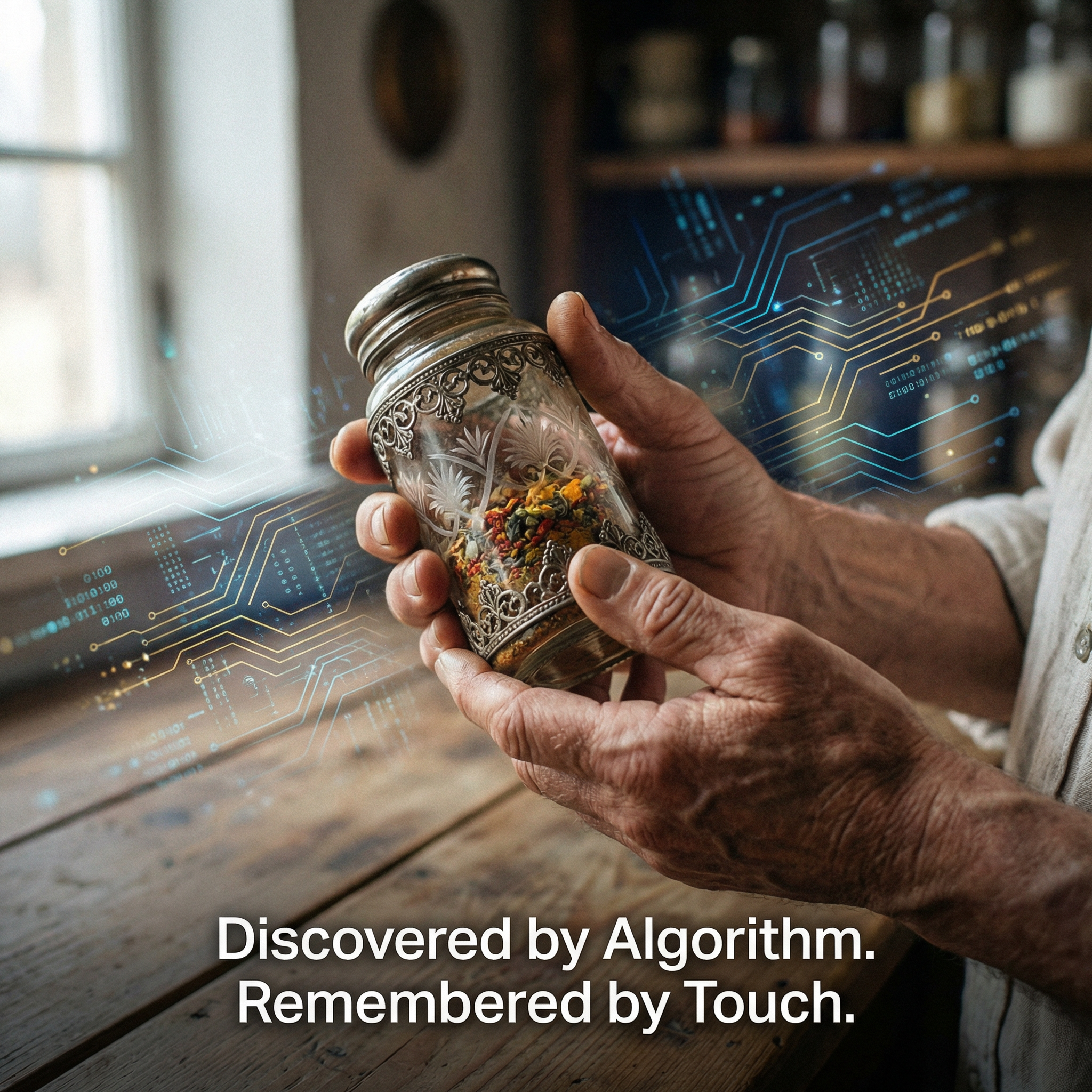
- When discovery becomes algorithmic, tactile experience becomes your primary differentiation—the physical details that create memory and loyalty.
- Design for two languages: structured data that speaks to algorithms, and sensory design that speaks to the hands holding your product.
The screen fatigue nobody’s talking about
Here’s what’s funny about the AI shopping revolution: it’s happening at the same moment people are desperate to touch things again.
After years of pandemic-accelerated digital everything, I’m noticing a counter-trend that doesn’t get enough attention. People are tired of screens. They’re craving texture, weight, the sensory experience of real objects in their hands.
Walk into any premium grocery store. Watch what people do. They pick things up. They turn jars over. They run their fingers across labels. They’re not just reading—they’re feeling.
This isn’t irrational behavior. It’s human behavior. We trust what we can touch. We remember what we experience physically. And in a world where algorithms increasingly mediate our choices, that tactile moment becomes more valuable.
So the question isn’t “human experience vs. AI recommendation.”
The question is: how do they work together?
Here is another shift in the world of AI
Last week, I explained the recent developments around Agent-Driven User Interface, and now OpenAI has launched the Agentic Commerce Protocol with Stripe. It lets you complete purchases inside ChatGPT without leaving the chat. Shopify is building infrastructure that lets AI agents tap into product catalogs and build carts across multiple merchants. Amazon, Google, PayPal, Mastercard—they’re all racing to build their own versions.
McKinsey projects that by 2030, personal AI shopping agents could influence over half of global consumer spending.
This isn’t a “maybe someday” technology trend. Albertsons is live. Target launched a ChatGPT shopping app. Etsy debuted on ChatGPT’s Instant Checkout. The infrastructure is being built while most CPG brands are still debating whether to refresh their label designs.
So yes, AI is going to change how products get discovered and purchased.
But discovery isn’t the same as loyalty. Getting into the cart isn’t the same as staying in the rotation. And this is where the tactile experience becomes your competitive moat.
Confession time
We have been designing Trevean Spice packaging with obsessive attention to physical detail. Not because I’m a design snob—because I believe the moment someone holds my product is the moment the relationship actually begins.
The label has raised edges. Not printed-to-look-raised and actually raised. The smooth UV black glass and the natural wooden texture of the lids. These two materials together naturally provide a tactile exploration and interesting juxtaposition in addition to the labels. Run your thumb across it, and you feel the texture, the intention, the design, the craft, the artistry. Most people won’t consciously notice. But they’ll feel it. There’s something right about the proportions, something that signals care without screaming for attention.
We didn’t set out to make decorative choices—that’s how the design ultimately came together, though. These decisions were the result of thoughtful conversations with the designers at Pulp+Wire, during which we aligned on what really mattered. Through these discussions, our shared insights became the strategic north star guiding every design element we chose.
Here’s my bet: AI agents will get increasingly good at recommending products based on attributes, reviews, sustainability credentials, and price optimization. They’ll get you discovered.
But the process I went through with the design teams at Pulp+Wire made me realize that AI can’t replicate the experience of holding something that feels considered. It can’t communicate weight in the palm of your hand. It can’t convey the difference between a cheap tin lid and one with an engraved spiral that catches the light.
The AI gets you to the door, but it’s the physical experience that makes someone stay.
How do you design for both AI algorithms and human touch?
So now I’m designing for two very different customers—and two very different moments.
Moment one: The AI recommendation.
Customer tells their agent: “Find me a premium spice blend for Moroccan tagine, ethically sourced, under $25.”
An AI agent queries product databases, evaluates attributes, checks reviews, compares prices, and may even cross-reference sustainability claims.
At this moment, my product needs to speak to a machine. Structured data. Verifiable credentials. The EU’s new Digital Product Passport regulation—which starts phasing in across product categories in 2026—is pushing exactly this direction. Products need machine-readable identities that AI agents can query and trust.
My NFC chip can carry that data. Origin verification. Supply chain transparency. Sustainability claims that aren’t just marketing copy but actual, validated credentials.
This is how you get discovered in an algorithmic world.
Moment two: The unboxing.
The package arrives. Customer opens the box. Pulls out the jar.
Now everything changes.
The weight feels substantial. The label has texture under their fingertips. They turn the jar over, notice the engraved lid, and trace the spiral without quite knowing why it feels satisfying. They tap their phone to the NFC chip and watch a sixty-second video of the actual farm where this blend originated.
Loyalty comes from that experience—not the algorithm nor the data.
Why most brands will get this wrong
Because I almost fell for it. Initially, I saw AI commerce as a threat to the physical product experience. I assumed, and others will as well, that if machines are making recommendations, the human touchpoints matter less.
Then it dawned on me that I was thinking about this backward, and I started thinking about how to embrace this new era of commerce.
When discovery becomes algorithmic, the physical experience becomes your primary differentiation.
Think about it: if AI agents are optimizing for attributes that can be measured and compared—price, reviews, certifications, delivery speed—then every product starts looking the same to the algorithm. You’re competing on a spreadsheet.
But the spreadsheet can’t capture what it feels like to hold something beautiful. It can’t measure the micro-moment when someone runs their thumb across a raised label and thinks, without words, someone cared about this.
That’s someone taking considerable care and thought about their creativity. This is the unique element that algorithms can’t turn into a standard product.
What are the three layers of AI-era product design?
So here’s how I’m thinking about it now, and why you should as well:
- Layer one: Machine-readable identity. The NFC chip carries structured data that AI agents can query. Verified origin. Sustainability credentials. Supply chain transparency. This is the language my product speaks to algorithms—and it needs to be fluent in it.
- Layer two: Human-discoverable story. The same NFC chip, when tapped by a human, unlocks the origin narrative. The farmer. The harvest. The cultural context of the blend. This is the story that creates meaning beyond the transaction.
- Layer three: Tactile signature. The raised label edges. The Fibonacci spiral on the lid. The weight of the glass. The details that don’t appear in any database but are recorded immediately when someone holds the product.
Each layer complements and enhances the other.
The AI gets you recommended. The story creates a connection. The tactile experience creates the memory.
And memory is what drives the second purchase, the third, the “you have to try this” text to a friend.
What does this mean for product strategy?
If you’re building a physical product today, you’re facing a design challenge that most companies haven’t even recognized:
You need to be legible to machines and memorable to humans.
- Legible means structured data, verified claims, and machine-queryable attributes. It’s the price of entry for algorithmic discovery.
- Memorable means physical experience, tactile intention, the sensory details that create emotional resonance. It’s the moat that keeps you from becoming a commodity.
Most brands will optimize for one or the other. They’ll either chase the algorithm with better data and SEO-style product attributes, or they’ll double down on packaging design without building the digital infrastructure that gets them discovered.
The ones who figure out both will have a structural advantage.
The uncomfortable truth
AI commerce and AI in general are shifting faster than I can read the next article.
Albertsons is live, but most people aren’t using AI agents to shop for groceries yet. The Digital Product Passport is law in the EU, but enforcement timelines keep shifting. McKinsey’s 2030 projection could be optimistic—or conservative.
What I know is this: the infrastructure for algorithmic discovery is being built right now. And simultaneously, people are hungrier than ever for products that feel real, productsthat offer a sensory experience screens can’t replicate.
In a world where AI increasingly decides what gets recommended, as product managers, we need to think about what makes someone remember a product.
It’s not the data. It’s not the algorithm. It’s not even the story, exactly.
It’s that magical feeling of holding something that someone clearly gave a damn about to design.
That’s what I’m designing for. The raised edge. The engraved spiral. The weight that says this matters.
If you’re building a physical product, start here: audit your product data for machine readability, then ask yourself what someone feels the first time they hold it. The gap between those two answers is your opportunity.
The AI can get you discovered. But it can’t make you unforgettable.
That’s still a human job.
Frequently Asked Questions
What is agentic commerce?
Agentic commerce is when AI agents autonomously complete purchases on behalf of consumers. Instead of browsing and clicking, a customer describes what they need—”find me a premium spice blend, ethically sourced, under $25″—and the AI agent searches, compares, and purchases without further input. Major retailers like Albertsons, Target, and Etsy have already launched these capabilities.
How do AI shopping agents discover products?
AI agents query product databases for structured data, including verified attributes, sustainability credentials, reviews, pricing, and availability. They don’t “see” packaging design or feel product weight. They read machine-formatted information. Products without structured, verifiable data become invisible to algorithmic discovery.
What is the EU Digital Product Passport?
The Digital Product Passport is an EU regulation that requires products to carry machine-readable digital identifiers containing verified information on origin, materials, environmental impact, and lifecycle data. It begins phasing in across product categories in 2026. For brands building NFC or connected packaging, it provides a framework for the structured data that AI agents will increasingly require.
Why does tactile design matter more in an AI commerce world?
When AI handles discovery, every product competes on the same measurable attributes—price, reviews, certifications. Physical experience becomes the primary differentiator because it’s the one thing algorithms can’t commoditize. The moment a customer holds your product is when loyalty begins, not when the algorithm recommends it.
How do I make my product both machine-readable and memorable to humans?
Design in three layers: machine-readable identity (structured data for algorithms), human-discoverable story (narrative content accessed via NFC or QR), and tactile signature (physical details like texture, weight, and material quality). These layers compound—the AI recommends you, the story creates a connection, and the tactile experience creates memory.