
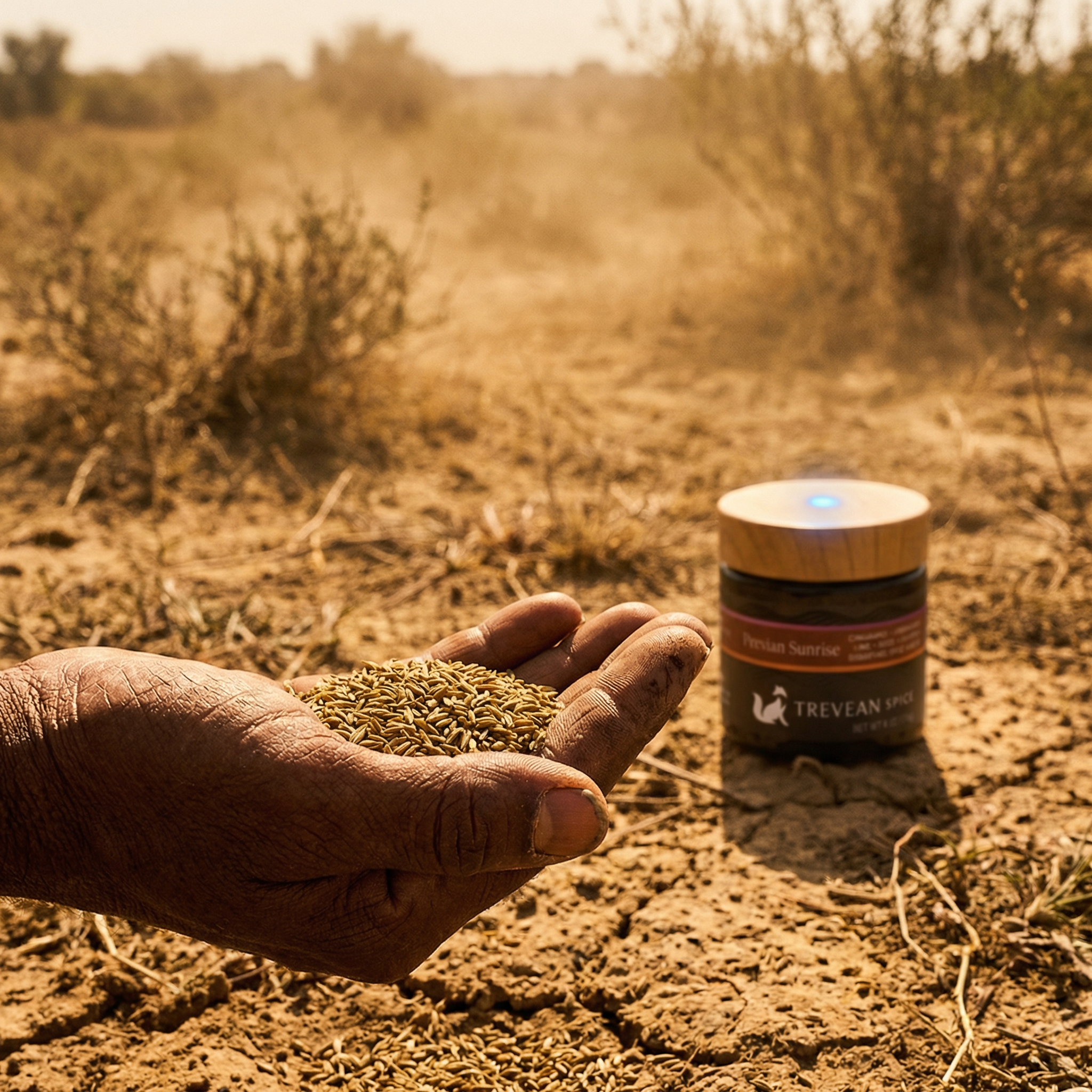
Everyone’s panicking about traceability regulations. I knew this was coming, and frankly, it should have come much sooner.
Not because I’m smarter. Because I was reading the tea leaves.
When you build a product around transparency, compliance isn’t a project. It’s a receipt for the work you already did.
Let me explain why this matters for you. Especially if you’re a product manager or founder who thinks supply chain traceability is someone else’s problem.
Two big things happened in the food industry this year. And most founders missed both.
First, the EU started enforcing Digital Product Passports. By 2027, entire industries will need to provide consumers with one-click access to a product’s full life cycle. Where it came from. What’s in it? How it was made. How to dispose of it. Every product gets a digital birth certificate that follows it from creation to your kitchen.
Second, the FDA’s FSMA 204 Food Traceability Rule was supposed to take effect in January 2026. They pushed the compliance deadline to July 2028 because most companies aren’t ready. The rule requires detailed electronic records that allow the FDA to trace high-risk foods through every stage of the supply chain within 24 hours of a request.
24 hours. From farm to your shelf. On demand.
You read that right, and read it again.
Most companies can’t tell you where their product was last Tuesday. Now they need to produce an end-to-end traceability record in a day.
TL;DR: The EU mandates Digital Product Passports by 2027. The FDA’s FSMA 204 traceability rule kicks in July 2028. Most food brands are scrambling. We built it into Trevean Spice from day one — not because of regulation, but because transparency is our product.
Why Are Big Companies Scrambling to Comply?
Here’s what happened. For decades, food companies built supply chains around one metric: cost per unit.
They optimized for margin. For speed. For volume.
They did not optimize for knowing where things came from.
So when a regulator shows up and says, “trace this cumin back to the farm it grew on,” they can’t. Because their cumin passed through four middlemen, got blended with product from three different regions, sat in a warehouse for months, and arrived at a processing facility where nobody recorded which batch went where.
Their supply chains were built to move product. Not to tell the truth about it.
That’s not a technology problem. That’s a product decision they made years ago. They chose cost over origin. And now the bill is coming due.
The traceability market is growing at an annual rate of 8%. Projected to hit $28.4 billion by 2030. That growth isn’t coming from companies that suddenly care about where food comes from. It’s coming from companies that are terrified of non-compliance.
There’s a difference. And your customers will feel it.
What Does Trevean Spice Already Have That Others Don’t?
I wrote last week about meeting Vikram, a third-generation cumin farmer in the Barmer district of Rajasthan. That trip changed everything about how we build Trevean Spice.
But here’s the part I didn’t fully explain: the traceability infrastructure we built around that relationship.
When we source cumin from Vikram’s farm, we record the harvest date, the specific field, and the drying method used. When Rushi works with the farmers to develop a blend like Rajasthan Gold, we document which farms contributed each ingredient and in what ratio. Every batch gets tested for purity and potency before it ships.
We know the soil. We know the farmer. We know the batch.
This wasn’t a compliance exercise. We did it because Rushi sat in Vikram’s home and saw what happens when a major exporter blends his cumin with filler and sells it as premium. We did it because the adulteration problem is real, and we wanted proof that our product is different.
The result? We accidentally built a system that satisfies most of what these new regulations require.
I say “accidentally” with a caveat. It wasn’t accidental at all. It was a product decision. We chose transparency as the core of our product before we knew that regulations would force everyone else to follow suit.
And that’s the insight I want you to take from this.
How Does a Product Decision Become a Regulatory Advantage?
If you’re building a product right now, whether it’s spices or software or anything where your customer needs to trust what’s inside, you have a choice.
Option A: Build your product around the cheapest, fastest path to market. Handle traceability later when regulations force you. Bolt on compliance systems after the fact. Scramble when the deadline hits.
Option B: Build your product around truth from day one. Know your supply chain. Document your sources. Test your inputs. Make transparency a feature, not an afterthought.
Option A is cheaper on Monday. Option B is cheaper forever.
Here’s why. When a company chooses Option A and later needs to comply with something like FSMA 204 or Digital Product Passports, they’re retrofitting. They’re buying software to track supply chains they never understood. They’re hiring consultants to map processes they never documented. They’re forcing suppliers to share data they never collected.
That retrofitting is expensive. It’s disruptive. And worst of all, it produces compliance without conviction. The data satisfies the regulator, but it doesn’t tell the customer a real story. Because there is no real story to tell. There’s just a checkbox.
When you choose Option B, compliance is a side effect. You don’t need to retrofit. You already have the data because you needed it to build the product you believed in.
The farmer relationships? Already there.
The batch testing? Already done.
The origin documentation? Already recorded.
The story behind the product? Already true.
What Does Digital Product Compliance Look Like in Practice?
Let me get specific. Because I know you want the steps, not just the philosophy.
Here’s what we document for every Trevean Spice blend, and what you should think about documenting for your own product:
Origin records. For each ingredient, we record the farm or cooperative, the region, the harvest window, and the farmer’s name. This is the foundation. If you can’t answer “where did this come from?” for every input in your product, you have a traceability gap.
Processing documentation. How was the raw material handled after harvest? For spices, this means drying method, storage conditions, and transport timeline. For your product, this means documenting every transformation step from raw input to the finished output.
Batch-level testing. We test every batch for purity, potency, and the presence of adulterants. This isn’t just quality control. It’s proof. When a customer asks what’s in this jar, you can point to a lab result rather than a marketing claim.
Chain of custody. Who touched the product at each stage? From the farmer to the blending facility to packaging to your shelf. Every handoff is a potential failure point. Document them all.
Digital access. This is where NFC comes in for us. We’re building the infrastructure to let a customer tap a spice lid and see the entire journey. But even without NFC, you can create accessible digital records. A QR code. A batch lookup on your website. Something that turns documentation into a customer experience.
None of this requires a compliance department. None of this requires enterprise software. It requires a decision: knowing where your product comes from is part of building the product.
What’s the PM Lesson Behind All of This?
I’ve spent 25 years in product management. At HP. At Dell. Now at Trevean Spice.
And one pattern keeps repeating: the companies that build the right thing for the right reason always end up ahead of the companies that build the minimum thing for the immediate reason.
This is true for features. It’s true for architecture. And it’s true for supply chain transparency.
The founders I talk to who are worried about Digital Product Passports and FSMA 204? They’re asking the wrong question. They’re asking “how do I comply?” when they should be asking “why don’t I already know where my product comes from?”
Because if the answer is “I never needed to know,” that tells you something about the product you built.
And if the answer is “I’ve always known,” then regulations aren’t a threat. They’re a moat.
Every company that scrambles to comply is spending money to catch up to where you already are. Every consultant they hire, every system they install, every supplier audit they run, that’s money spent getting to a starting line you crossed years ago.
What’s the Gap Between Compliance and Conviction?
Here’s the thing that nobody in the traceability industry wants to say out loud.
There’s a massive difference between a company with traceability data and one with a traceability story.
Data satisfies regulators. Stories win customers.
When Trevean Spice eventually puts a Digital Product Passport on our jars (and we will), it won’t feel like a compliance exercise. It will feel like an extension of what we already do. You’ll tap the lid and see Vikram’s farm. You’ll see the batch test results. You’ll see the blend ratios that Rushi developed with Priya and the women in Vikram’s village.
That’s not a passport. That’s a relationship.
And no amount of traceability software can manufacture that. You either built the relationships or you didn’t. You either went to Rajasthan or you didn’t. You either tested every batch because you cared about the truth, or you tested because a regulator told you to.
Customers will know the difference. They always do.
What Should You Do on Monday Morning?
If you’re a founder or PM reading this, here’s what I want you to do this week:
Pick one input in your product. Your most important ingredient, component, or data source. The one that matters most to your customer.
Now answer these questions:
Where does it come from? Not the distributor. The actual source.
Who made it or grew it? Do you know their name?
What happens to it between the source and your product? Can you document every step?
If it was tested, what did the results show? Do you have records?
Could you show all of this to a customer in under 60 seconds?
If you can answer all five, you’re ahead of most companies that are spending millions on compliance right now.
If you can’t, you have a choice to make. And I’d make it before the regulations decide for you.
The companies that will win in the next decade aren’t the ones with the best compliance systems.
They’re the ones who never needed compliance systems in the first place. Because they built products around truth before anyone required it.
That’s not a regulatory strategy. That’s a product strategy.
And it starts with knowing where things come from.
This post is part of an ongoing series connecting product management principles to the real decisions behind building Trevean Spice. If you read “The Cumin Test” and it resonated with you, this is the next chapter. Same farm. Same farmer. Different lesson.
Related Reading
- NFC Chips: The Future of Product Transparency — the technology powering digital passports
- The Cumin Test — why knowing where things come from changes everything
- AI Can Now Smell a Fake — how AI adds a fraud detection layer to traceability
- Free Startup PM Toolkit — frameworks for building transparent products
Follow The Product Manager’s Journal for more, or subscribe to the blog to get these posts first.
Frequently Asked Questions
What is a Digital Product Passport for food?
A Digital Product Passport (DPP) is a digital record that follows a product through its entire lifecycle — from raw materials to consumer. For food, it includes origin, processing, certifications, and supply chain data. The EU is mandating DPPs across industries starting in 2027.
When does the EU Digital Product Passport requirement take effect?
The EU Digital Product Passport regulation begins rolling out in 2027, with different product categories phased in over time. Food and agriculture products are among the sectors expected to be covered. Companies selling into EU markets need to prepare now.
What is FSMA 204 and who does it affect?
FSMA 204 is the FDA’s Food Traceability Rule, requiring companies that manufacture, process, pack, or hold foods on the Food Traceability List to maintain detailed electronic records. The compliance deadline is July 2028. It affects anyone in the supply chain for high-risk foods.
How can small food brands prepare for traceability regulations?
Start by building traceability into your product from day one rather than retrofitting later. Use tools like NFC tags and digital supply chain platforms. Document your sourcing, processing, and distribution data now — even before regulation requires it. The brands that move first gain both compliance and consumer trust.