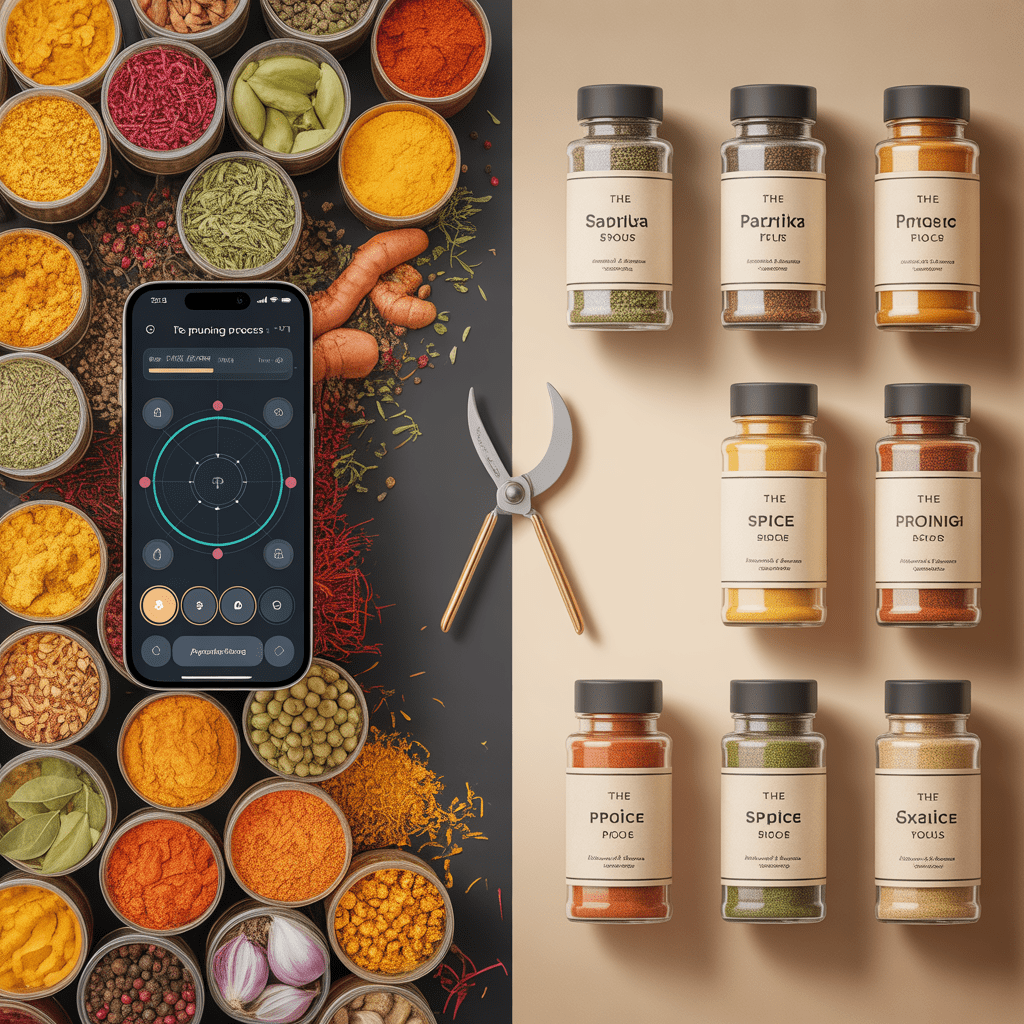
When Letting Go Becomes the Path Forward
As product managers, we pour our hearts and souls into building features we believe will delight our users. We spend countless hours in ideation, research, design, and development, only to sometimes discover that what seemed brilliant in theory falls flat in practice. At Origin Spice, our journey to “curate global flavors for modern kitchens” taught us a valuable lesson about knowing when to let go.
Today, I am sad to share our experience with a feature we lovingly built, painfully pruned, and ultimately learned tremendously from.
The AR Spice Origin Story: A Feature That Didn’t Blend Well
In our early pitch deck, we proudly highlighted an “Augmented Reality app showing origin stories” as one of our unique features. I was more than excited about this idea, this was going to be the differentiator for Origin Spice against the traditional spice market competitors. The concept was captivating: users would scan their spice containers with their phones, and an AR experience would transport them to the farms where their cardamom, saffron, or sumac was harvested. They would meet the farmers, understand the traditional harvesting methods, and forge a deeper connection with the ingredients, enriching their meals.
Our team spent four months building this feature. Designers crafted beautiful visual experiences, developers wrestled with AR frameworks, and content creators traveled to document authentic stories. The marketing team began teasing the feature on social media, calling it “the future of ingredient storytelling.”
But when we launched the beta, reality hit us like a dash of ghost pepper: the feature was failing to resonate.
The Warning Signs We Initially Ignored
Looking back, the signs were evident from the beginning:
- User testing hesitation: Beta testers would say, “Wow, that’s cool,” but when asked if they’d use it regularly, they paused before offering noncommittal responses.
- Complex onboarding: Users had to download a separate app, grant camera permissions, ensure proper lighting, and hold their phones at just the right angle. Many gave up after the first attempt.
- Low repeat usage: Even among successful first-time users, fewer than 7% returned to the feature a second time.
- Customer support burden: Our team spent disproportionate time troubleshooting AR issues rather than addressing core product questions.
- Misalignment with core promise: Most importantly, the feature didn’t truly help users cook better or discover new flavors, which is our primary value proposition.
The Difficult Decision-Making Process
After six weeks of post-launch data collection, we gathered the cross-functional team for what we called our “spice inventory”—a candid review of what was fresh and what was stale in our product.
First, we returned to first principles and asked ourselves:
“If we were building Origin Spice from scratch today, would this feature cut?”
The uncomfortable silence said everything. Dang it! Even I looked sheepishly down at the floor, knowing what my answer would be.
Next, we calculated the ongoing costs:
- 35% of engineering time spent on AR maintenance and improvements
- 42% of customer support tickets related to AR issues
- $7,500 monthly server costs for hosting AR content
Finally, we mapped the opportunity cost:
- Features being delayed by AR maintenance (personalized recipe recommendations, freshness tracking system)
- Core user needs are going unaddressed while we focus on a peripheral experience
Despite months of investment, the data was precise: our AR Origin Stories feature was dragging us away from our mission rather than enhancing it.
How We Pruned Thoughtfully
Ok, we made the hard decision. And once we did, we had to remove the ego and emotion from the feature and follow a careful process to sunset the feature:
- Internal alignment first: We brought the entire company together to explain the decision, acknowledge everyone’s contributions, and share what we learned. We framed it as evolution, not failure.
- Data-driven narrative: We prepared a clear explanation backed by user feedback and engagement metrics.
- Gradual phase-out: Rather than pulling the plug overnight, we implemented a 30-day transition period.
- User communication: We sent a thoughtful email explaining:
- The original vision behind the feature
- What we learned from user feedback
- How removing this feature would allow us to double down on core experiences
- A timeline for the phase-out
- Alternative ways to learn about spice origins (we created detailed farmer profile cards)
- Feedback collection: We offered users a channel to share how they felt about the change.
The result surprised us. Instead of backlash, many users respected our transparency. Several even expressed relief that we were focusing on the core experience they valued most.
Preserving What Mattered
While we removed the AR feature, we didn’t discard everything. We identified the elements worth preserving:
- The origin stories: These became beautiful digital content in our app and website, accessible with a simple tap rather than a complex AR setup.
- The farmer relationships: We continued highlighting the people behind our spices, just in a more accessible format.
- The technical learnings: Our development team documented all AR implementation insights for possible future innovations.
- The user research: Insights about how customers wanted to connect with ingredients informed future features.
By carefully salvaging what was valuable, we transformed a “failed” feature into an investment in our product’s future.
The Framework: How to Know When It’s Time to Prune
I am going to share below our experience and how we developed a systematic approach to feature evaluation that we now apply quarterly:
1. Return to Core Promise
Ask these questions about any feature:
- Does it directly serve our core product promise?
- Would new users immediately understand its value?
- Does it make the primary experience better, faster, or simpler?
- If removed, would our power users genuinely miss it?
2. Analyze the Data Honestly
Look beyond surface metrics:
- What percentage of users engage with the feature after first use?
- Is engagement sustained or declining over time?
- What’s the feature’s impact on key metrics like retention and conversion?
- Are users organically discovering and using the feature, or do they need constant prompting?
3. Calculate True Cost
Measure the complete burden:
- Engineering hours spent on maintenance
- Support tickets and customer confusion
- Server/infrastructure costs
- Design and content updates required
- Team cognitive load (perhaps the most overlooked cost)
4. Assess Opportunity Cost
Consider what you’re not building:
- Which higher-impact features are being delayed?
- Could resources be redirected to strengthen core capabilities?
- What experiments aren’t you running because capacity is tied up?
5. Test the Absence
Before permanent removal, try these approaches:
- Hide the feature for a segment of users and measure impact
- Reduce prominence and track if users still find and use it
- Simulate removal by making it temporarily unavailable to a test group
The Spice of Product Management: Knowing What to Remove
Our removal of the AR feature marked a turning point for Origin Spice. Six months later, our app store ratings improved from 4.1 to 4.7, our core feature engagement increased by 38%, and our development velocity nearly doubled. Most importantly, we stayed true to our mission of helping home cooks explore global flavors with high-quality, ethically sourced spices.
The experience taught us that product management isn’t just about building new things—it’s equally about having the courage to remove what isn’t working. Like cooking with spices, sometimes the secret isn’t adding more, but knowing exactly what to leave out.
As we continue our journey curating flavors for modern kitchens, we carry this lesson with us: a disciplined approach to feature pruning isn’t an admission of failure. It’s a commitment to focus, clarity, and ultimately, building something truly exceptional.
What features do you need to prune in your product journey? What was your decision-making process? Share your experiences in the comments below.
About Origin Spice: Founded in 2024, Origin Spice is transforming home cooking through ethically sourced, small-batch spices delivered directly to consumers’ kitchens. Our subscription model combines premium ingredients with education and inspiration, helping home cooks explore global flavors with confidence.


 The Product Manager's Journal
Leave a comment