Part 2 of the Product Onion Series
Let me tell you about the moment Trevean Living almost became just another soap company.
We were at a farmer’s market—our third one that month. Sales were… fine. People would pick up our bars, smell them, nod appreciatively, and say: “These are nice.” Then they’d put them down and walk to the next booth.
“Nice.”
That word haunted me for weeks.
Because “nice” doesn’t build a business. “Nice” doesn’t create loyal customers. “Nice” is what people say when they’re being polite before they forget you exist.
We had beautiful products. Gorgeous packaging. A cohesive brand aesthetic. We had built from the outside in—and it showed.
It was time to tear it all down and start with the question we should have asked first: What problem are we actually solving?
Layer 1: Finding the Core Problem (Or: What We Got Wrong First)
Our first attempt at defining the problem: “People want natural, eco-friendly soap.”
Sounds reasonable, right? Except it’s not a problem—it’s a preference. And preferences don’t create urgency. They don’t change behavior. They definitely don’t build a sustainable business.
So we went back and actually talked to people. Not about our products—about their lives.
Here’s what we discovered:
Customer #1 (Sarah, 34): “I want to buy eco-friendly products, but honestly? Most of them don’t work as well. I tried that ‘natural’ deodorant everyone raves about, and I smelled like a gym locker by noon. I can’t afford to waste money on products that disappoint.”
Customer #2 (Marcus, 29): “I try to be conscious about what I buy, but it’s exhausting. I have to research every ingredient, figure out what’s actually sustainable versus greenwashing, and usually the ‘good’ option costs twice as much. Sometimes I just give up and buy whatever’s at Target.”
Customer #3 (Jennifer, 41): “My daughter has sensitive skin, and I’ve tried everything. The ‘natural’ products either irritate her skin or fall apart in the shower. The conventional ones work but have ingredients I can’t even pronounce. Why can’t something be both effective AND safe?”
Notice what they’re NOT saying? They’re not saying “I want more soap options.”
The actual core problem we identified:
Conscious consumers are tired of being forced to choose between products that perform well and products that align with their values—and they’re exhausted by companies that use “natural” and “eco-friendly” as marketing buzzwords while delivering subpar experiences at premium prices.
That’s a problem. That’s something that creates friction in people’s lives. That’s worth solving.
Layer 2: Domain Logic & Product Strategy (How We’d Solve It Differently)
Once we had the real problem, we could design our approach. We decided on three strategic pillars:
Pillar 1: Performance First, Natural Second We would never launch a product that didn’t perform as well as or better than conventional alternatives. Being “natural” was a constraint, not an excuse for mediocrity.
Pillar 2: Radical Transparency Every ingredient listed with its purpose. No hiding behind “fragrance” or “proprietary blends.” If we couldn’t explain why it was there, it wasn’t going in.
Pillar 3: Honest Pricing We’d charge what it actually costs to make quality, sustainable products—and we’d show customers exactly where their money goes.
This strategy meant turning down some “opportunities.” A boutique wanted to carry our products, but their markup would have made our soap $18 a bar. We said no. It didn’t serve the core problem.
Layer 3: Features & Functionality (What This Actually Looked Like)
Our features flowed directly from the strategy:
Product Features:
- Full ingredient glossaries (not just lists—explanations)
- Performance guarantees with actual money-back promises
- Packaging that communicated the “why” behind each ingredient
- Size options: full bars and sample packs (so people could try without committing)
Business Features:
- “Behind the Price” breakdowns on our website
- Quarterly impact reports (how many plastic bottles avoided, water saved, etc.)
- Direct feedback loop: every customer email went to us founders, not a customer service team
The feature we almost skipped (and thank goodness we didn’t): Sample packs. They seemed like a hassle—extra packaging, lower margins, more fulfillment complexity. But they directly solved the “I can’t afford to waste money on products that disappoint” problem.
First quarter after launching samples: 67% conversion rate from sample buyers to full-size purchases. That feature paid for itself within two months.
Layer 4: User Experience & Interface (Making It Effortless)
We designed every touchpoint to reduce the friction conscious consumers told us they experienced:
Website UX:
- No endless scrolling through ingredient databases
- Hover-over definitions for every ingredient (because who has time to Google “sodium cocoyl isethionate”?)
- Visual comparison charts: our products vs. conventional alternatives
- “Too Busy to Read?” summaries at the top of every product page
Packaging UX:
- QR code linking to full sourcing information
- Usage tips printed directly on wrapping (not on a separate insert that gets thrown away)
- Clear “lasts approximately X washes” guidance
- Composting instructions
Purchase UX:
- One-click reordering
- “Subscribe & Save” that was actually flexible (pause, skip, modify—no penalties)
- Gift options that didn’t require creating an account
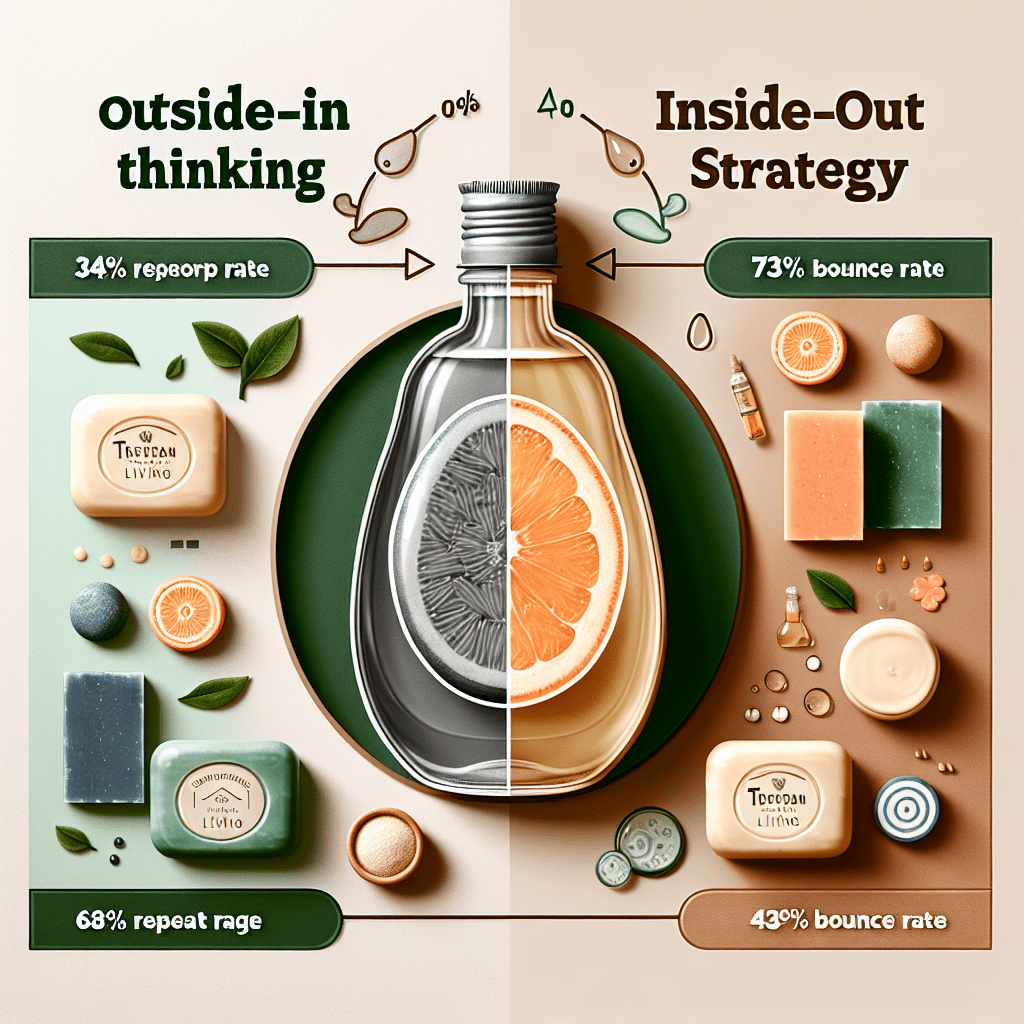
The mistake we made here: Our first website had this beautiful, minimalist design. Very aesthetic. Completely unclear. Bounce rate was 73%.
We A/B tested a version with more direct copy and clear category labels. Bounce rate dropped to 41%. Turns out, “effortless” beats “beautiful” when people are trying to solve a problem.
Layer 5: Product Marketing & Messaging (Finally, The Fun Stuff)
With all the inner layers in place, our marketing wrote itself. We weren’t guessing—we were speaking directly to the problem we knew we solved.
Messaging pillars:
Instead of: “Luxurious handcrafted soaps made with organic ingredients”
We said: “The soap that works as well as the chemical stuff, without the ingredients you can’t pronounce”
Instead of: “Eco-friendly lifestyle products”
We said: “Finally: products you don’t have to apologize for—to your skin or the planet”
Content strategy:
- Ingredient education series (our most-shared content)
- “Behind the Product” videos showing actual production
- Customer stories featuring real problems solved
- “Greenwashing Buster” posts calling out industry BS
The campaign that changed everything: “The $18 Soap Breakdown” — We literally showed where every dollar goes in a boutique bar of soap (spoiler: usually $11 to the retailer, $4 to marketing, $2 to the brand, $1 to ingredients). Then showed our breakdown: $6 to ingredients, $2 to packaging, $3 to us, $1 to shipping.
That post went semi-viral in sustainability circles. Not because it was clever—because it was honest.
Layer 6: Sales & Go-to-Market Strategy (How We Actually Grew)
Initial channels:
- Farmer’s markets (testing ground and direct customer feedback)
- Direct-to-consumer website (primary revenue)
- Strategic wholesale (only partners who wouldn’t force us to compromise on pricing/positioning)
Growth tactics:
- Referral program: “Give a sample, get a sample” (aligned with our trial strategy)
- Partnership with eco-influencers (but only ones who actually used and loved the products)
- Corporate gifting (companies wanting to give meaningful, sustainable gifts)
The pivot we made in Year 2: We launched a “Lifestyle Box” subscription—seasonal products curated around themes (not just soap). This came from customer feedback: “I love your soap, but now I want everything in my house to be like this.”
We didn’t invent this idea from thin air. Our customers literally told us the next problem to solve.
The metric that surprised us most: Time spent on our ingredient education pages: average 4 minutes 17 seconds. People are reading. They want to understand. They’re tired of being sold to—they want to be informed.
What We Got Wrong (And What We’d Do Differently)
Mistake #1: Waiting too long to launch samples We thought we needed perfect products before offering trials. Wrong. Trials are how you get to perfect products.
Mistake #2: Building for everyone Our initial messaging tried to appeal to “anyone who cares about the environment.” That’s everyone and no one. Once we got specific about the problem, we found our people.
Mistake #3: Undervaluing the education component We thought people wanted products. Turns out, they wanted understanding. Our ingredient glossary and “How It’s Made” content drives more engagement than our product photos.
Mistake #4: Overcomplicating the packaging Our first designs were beautiful but confusing. V2 was simpler, clearer, and converted 28% better.
The Real Lesson: Start With the Problem, Not the Product
Here’s what I wish I’d known when we started:
You can’t “brand” your way to product-market fit. You can’t “market” your way past a weak core. You can’t “growth hack” a product that doesn’t solve a real problem.
But when you get the core right—when you truly understand the problem and build every layer to serve that problem—everything else becomes easier.
Your marketing isn’t a guess—it’s a direct translation of the problem you solve.
Your features aren’t a wish list—they’re tools that serve your strategy.
Your growth isn’t luck—it’s the natural result of solving something people actually care about.
Trevean Living works not because we make beautiful soap (though we do). It works because we solved a problem that was creating real friction in people’s lives: the exhausting choice between values and performance.
What’s Next
In the next post, I’ll walk you through how I’m applying these same principles to Trevean Spice—a business that doesn’t exist yet. You’ll see the Product Onion framework in action from day zero, including all the questions I’m asking before I design a single thing.
Next in series: Building Trevean Spice from scratch using the Product Onion (and why I’m not picking brand colors yet)
 The Product Manager's Journal
Leave a comment