Part 6 of our Product Operating Model Transformation Series
Four months into our transformation journey, I honestly thought we’d cracked the code. We had the right pilot team, they’d developed solid skills, and leadership was actually backing us up instead of just paying lip service. All the external stuff was sorted.
So when Jake, our designer, pulled me aside after a team meeting, I wasn’t prepared for what he was about to say.
“Look, I need to be honest with you,” he said, looking genuinely uncomfortable. “I don’t think this new approach is working. I’m spending half my time sitting in research sessions that don’t seem to change anything we build anyway, and the other half in these workshops that feel like we’re designing by committee. I hate saying this, but… I was way more productive before.”
My heart sank. Then Sarah, our product manager, chimed in during our next retrospective: “I used to feel confident about our direction. Now everything feels uncertain all the time. I’m questioning every single decision, and honestly? I’m not sure if that’s making me better at my job or just paralyzing me.”
Even Maria, our engineering lead who I thought was totally bought in, admitted something that caught me off guard: “Don’t get me wrong, I like being involved in the decision-making. But now every technical choice becomes this whole team debate. Sometimes I just want someone to tell me what to build so I can focus on actually building it well.”
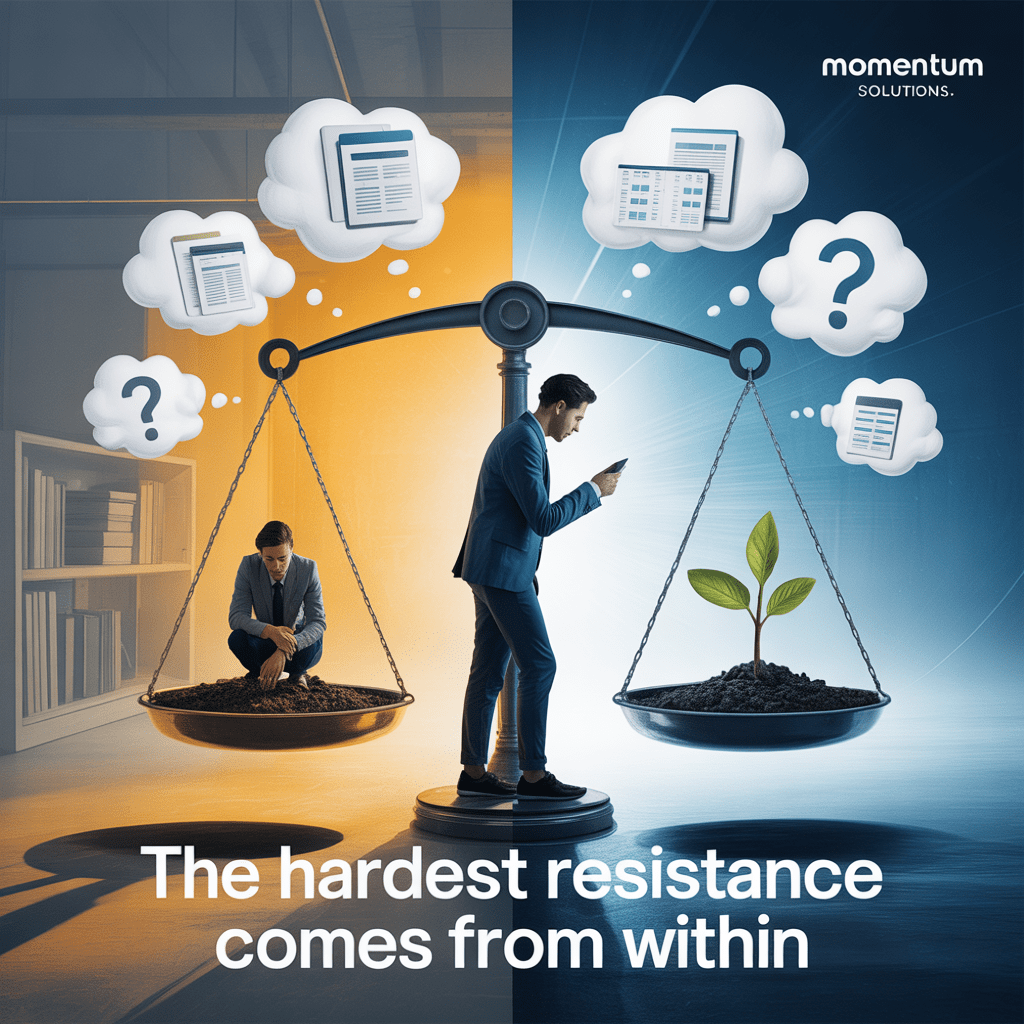
That’s when it hit me like a ton of bricks: the resistance wasn’t coming from leadership or stakeholders or any of the usual suspects. It was coming from inside our own pilot team.
The Resistance Nobody Warns You About
Here’s what all those transformation guides don’t tell you: even the most willing, committed team members will sometimes fight against the very changes they signed up for. And it’s not because they’re being difficult or have bad attitudes—it’s because changing how you work is genuinely hard, even when you want to do it.
Think about it for a second. These were people who were killing it in the old system. They’d built their careers, their confidence, their whole professional identity around doing things a certain way. And here we were, asking them to basically throw all that out the window and stumble around learning completely new approaches.
Of course they were going to resist sometimes. The thing that shocked me wasn’t that it happened—it was how sneaky it was.
The Faces of “I Don’t Want to Do This Anymore”
Jake’s “This Is Taking Forever” Crisis
Jake’s productivity anxiety was totally real. In the old world, he could crank out mockups based on whatever requirements and feedback came his way. Fast, clean, done. Now he was sitting in customer interviews, facilitating workshops, debating hypotheses. It felt like everything took twice as long.
When he said things like “We used to ship features way faster” or “All these meetings are killing my actual work time,” what he really meant was: “I don’t know how to measure whether I’m doing a good job anymore.”
Sarah’s “I Have No Idea What’s Happening” Spiral
Sarah’s thing was different. She was basically going through withdrawal from certainty. She used to have clear requirements, solid timelines, predictable outcomes. Now she was supposed to be comfortable with not knowing things, changing direction when data contradicted her assumptions, living in this constant state of “we’ll see what we learn.”
When she said “I used to know what we were building and when” or “How do I even report progress when everything might change tomorrow?” she was really saying: “I’m scared I look incompetent because I can’t give definitive answers anymore.”
Maria’s “Why Is Everything a Group Project Now?” Frustration
Maria’s resistance was more subtle but maybe the most painful. She’d spent years becoming really good at making technical decisions. She had solid judgment, deep expertise, the whole thing. Now suddenly everything was up for team discussion, and she felt like her expertise was getting diluted or ignored.
When she said “Why does every little thing have to be a group decision?” or “I’m supposed to be the expert here, why don’t you trust my judgment?” she was really saying: “I’m worried that what I’m good at doesn’t matter anymore.”
The “Who Am I Supposed to Be?” Identity Crisis
This was the one that flew under the radar for all of them. Jake was “the designer.” Sarah was “the product manager.” Maria was “the engineering lead.” Those weren’t just job titles—they were who they were. And the new approach was blurring all those lines in ways that felt really uncomfortable.
They weren’t saying it out loud, but I could see them thinking: “If everyone’s doing a little bit of everything, what makes me special? What’s my actual role here?”
The Emotional Rollercoaster of Change
Looking back, I can see that our team went through this totally predictable emotional journey:
Weeks 1-3: The Honeymoon Everything was shiny and new. They felt special being on the pilot team, excited about learning different approaches. I thought this was going to be easier than I’d expected.
Weeks 4-8: Reality Hits The novelty wore off fast. Changing work habits turned out to be way harder than learning new concepts. Everything felt awkward and inefficient. The old way started looking pretty appealing again.
Weeks 9-16: The “This Sucks” Phase This is when people started saying what they really thought. Questions about whether it was worth it. Some team members started sneaking back to old approaches when they were stressed or under deadline pressure.
Weeks 17-24: The Light Dawns The teams that pushed through this phase—and not all do—started actually seeing benefits. New practices began feeling natural instead of forced. Confidence started coming back.
Month 6+: The “I Can’t Believe We Used to Work That Way” Phase By this point, they were evangelists. Couldn’t imagine going back to the old approach.
The problem is most teams bail out during that “This Sucks” phase, right before things start clicking.
How We Actually Dealt With It (Trial and Error Edition)
Step 1: Stop Trying to Talk Them Out of Their Feelings
My first instinct was to explain why their concerns weren’t valid. Terrible idea. Their concerns were completely valid—they really were less efficient in the short term, uncertainty really did suck, and yes, their roles really were changing in uncomfortable ways.
Instead of trying to convince them they were wrong, I started saying things like:
- “Yeah, this does feel slower right now. Let’s talk about why that might not be permanent.”
- “Uncertainty is uncomfortable as hell. Let’s figure out how to get better at dealing with it.”
- “Your role is changing, and that’s weird. Let’s work through what that means.”
Step 2: Let Them Complain to Each Other
The most helpful thing turned out to be weekly check-ins where they could just vent to each other about how hard this was. Jake’s breakthrough actually came when Sarah admitted she was struggling too. Instead of suffering alone, they started helping each other through the rough patches.
Step 3: Celebrate Weird Wins
We had to retrain ourselves to notice progress that didn’t look like traditional productivity. Instead of just counting features shipped, we started celebrating:
- Customer insights that completely changed our approach
- Hypotheses that we proved wrong before wasting time building the wrong thing
- Collaborative decisions that led to solutions none of us would have thought of individually
- Skills getting better week by week
Step 4: Give Them Permission to “Cheat”
This sounds counterintuitive, but we explicitly told them it was okay to fall back on old approaches when they were really under the gun. Having that escape valve actually made them less likely to use it because they didn’t feel trapped.
Step 5: Bring in Some War Stories
We brought in people from other teams who’d been through the same transition. Hearing from someone who’d felt exactly the same way and made it through was huge for morale.
The Specific Stuff That Actually Worked
For Jake’s “This Is Taking Forever” Problem
Instead of trying to convince him he was wrong about efficiency, we started tracking different things:
- How many customer problems we solved per month (not features delivered)
- How many bad assumptions we caught before building the wrong thing
- How much rework we avoided by doing discovery up front
- How confident stakeholders felt about our decisions
For Sarah’s “I Don’t Know Anything Anymore” Spiral
We reframed uncertainty as intentional learning instead of incompetence:
- Celebrated when data proved our initial assumptions wrong
- Tracked how uncertainty actually decreased over time as we learned more
- Showed concrete examples of how embracing uncertainty led to better outcomes
- Gave her tools for managing ambiguity without needing to eliminate it
For Maria’s “Everything’s a Group Project” Frustration
We worked on evolving from individual expertise to team capability:
- Created opportunities for her to teach the rest of us technical stuff
- Showed how collaboration was making her expertise more powerful, not less relevant
- Helped her find new ways to lead within collaborative processes
- Made sure everyone understood the unique value she brought to team decisions
For Everyone’s “Who Am I?” Identity Crisis
We helped them develop new professional identities:
- Actually rewrote job descriptions to reflect how roles were evolving
- Gave them chances to develop skills outside their traditional area
- Celebrated the unique perspective each role brought to collaboration
- Helped them see themselves as more well-rounded professionals, not just specialists
Red Flags That You’re Losing Them
Watch out for this stuff:
- People “forgetting” to use new practices
- Reverting to old approaches the second there’s any pressure
- Enthusiasm for transformation activities just… disappearing
- Making excuses for why new approaches won’t work in their specific situation
- Going back to rigid role boundaries
- Getting nostalgic about “how much simpler things used to be”
What It Looks Like When You’re Handling It Right
When you’re managing internal resistance well, you’ll see:
- People actually talking about what’s hard instead of pretending everything’s fine
- Team members helping each other through difficult parts
- Celebrating learning and growth, not just deliverables
- Gradual increase in confidence with new approaches
- People adapting practices to work better for their specific context
- Growing genuine enthusiasm as benefits become obvious
The Moment Everything Clicked
Our breakthrough came in month five. Jake was facilitating a design workshop—something he’d initially hated—and the collaborative process generated a solution that none of us would have come up with on our own. It was clearly better than anything he could have designed in isolation.
“Oh,” he said afterward, and I could see the lightbulb going off. “I’m not less productive. I’m productive in a different way. And what we’re creating together is actually better than what I used to create alone.”
That’s when I knew we’d turned the corner.
The Long-Term Payoff
Six months later, our pilot team had become the biggest advocates for the product operating model in the company. But more than that, they’d developed resilience for future changes. They’d learned that initial resistance to new approaches was totally normal and temporary, not a sign that the change was wrong.
This turned out to be huge as we kept evolving our practices and expanding transformation to other teams. They knew how to get through the sucky part.
If You’re Going Through This Right Now
For team leaders:
- Don’t try to talk people out of their concerns—acknowledge them
- Create space for people to vent and support each other
- Track progress using metrics that actually reflect the new value you’re creating
- Give people permission to occasionally fall back on old approaches when they’re really stuck
- Bring in success stories from people who’ve been through the same thing
For team members:
- Remember that feeling uncomfortable and inefficient is totally normal and temporary
- Find other people going through the same transition and lean on each other
- Focus on what you’re learning, not just what you’re delivering
- Celebrate small wins and skill improvements
- Be patient with yourself—this stuff takes time
The Bottom Line
This whole series has been about the messy, difficult, surprising reality of product operating model transformation. From figuring out if you’re ready, to avoiding the mistake of trying to do everything at once, to selecting the right pilot team, building skills, getting leadership support, and now dealing with internal resistance.
The biggest lesson? Transformation is hard, messy, and full of stuff nobody warns you about. But if you go into it with realistic expectations and genuine commitment to working through the difficult parts, you can create changes that actually stick and make everyone’s work better.
The product operating model isn’t magic. But it’s a powerful approach for organizations willing to do the real work of changing how they operate.
This wraps up our Product Operating Model Transformation Series. Thanks for sticking with me through all the messy, honest lessons we learned the hard way.
What internal resistance have you run into during transformations? How did you work through team member doubts and concerns? I’d love to hear your war stories in the comments.

 The Product Manager's Journal
Leave a comment