
When I first pitched Trevean Spice to investors, I led with our flashiest feature—an AR app that would let customers virtually tour spice farms in Morocco and India. The room went quiet. One investor finally asked, “But Dan, what problem are you actually solving?”
That question haunted me for weeks. We had built outward—starting with cool technology and working backward to find customers. It was completely wrong.
That’s when I discovered the Product Onion framework, and it saved our startup.
The Product Onion isn’t about making people cry (though some product decisions might). It’s about growing your business from the inside out, starting with raw customer pain and building each layer to reinforce the last. Strategy, design, growth, marketing—all of it anchored to one thing: solving the right problem for the right customer in the right way.
Here’s how we rebuilt Trevean Spice using this approach, and how you can apply it to your own business.
Layer 1: Core Customer Problem Set
The Heart of Everything
At the center of the product onion isn’t your vision, your technology, or your business model. It’s pain.
Raw, felt customer pain.
When we stripped everything back, we discovered three core problems that kept our target customers up at night:
- The Stale Spice Graveyard: 73% of home cooks owned expired spices they were afraid to throw away (because who wants to waste $18 on saffron?)
- The Overwhelm Factor: Standing in the spice aisle felt like navigating a foreign country without a map
- The Authenticity Gap: Grocery store spices delivered flat, lifeless flavors that bore no resemblance to the vibrant dishes they’d tasted while traveling
We validated these problems through 127 customer interviews. The pain was real, consistent, and urgent.
The wake-up call: One customer, Sarah, told us: “I bought a $15 jar of cardamom for one recipe. It’s been sitting in my cabinet for two years. Every time I see it, I feel guilty about wasting money AND about not being the adventurous cook I want to be.”
That’s when we knew we had our core.
Your Layer 1 Questions:
- What’s the single problem your customers lose sleep over?
- Can you describe their pain in their own words?
- Have you validated this pain with actual money-paying customers?
Layer 2: Vision & Strategy
Your North Star and Map
Once you’ve locked onto the pain, you need to define where you’re taking your customers—and how you’ll get there differently than everyone else.
Our vision became crystal clear: “Transform home cooking by making authentic, fresh spices accessible and approachable for everyday cooks.”
But vision without strategy is just wishful thinking. Our strategic framework:
The “Fresh-First” Strategy: Instead of competing on variety (like traditional spice companies), we’d compete on freshness and education. Small batches, direct relationships with growers, and curated selections that taught customers how to use each spice.
The “Journey” Positioning: We weren’t selling spices—we were selling culinary adventures. Each box would transport customers to a different region, with stories, techniques, and confidence to explore.
This strategic clarity became our filter for every decision. When customers requested 47 different curry powder variations, we said no—it didn’t serve our “journey” positioning. When a distributor offered us shelf space at Whole Foods, we said no—it would compromise our “fresh-first” strategy.
Your Layer 2 Questions:
- What does your product want to be when it grows up?
- How will you solve the core problem differently than existing solutions?
- What will you say “no” to in service of your strategy?
Layer 3: Growth & Engagement Engine
How Your Product Sells Itself
Growth isn’t just marketing. It’s how your product naturally spreads and becomes habit-forming.
We built three key growth loops into Trevean Spice:
The “Dinner Party” Loop: Each spice box contained enough for 4-6 servings, encouraging customers to cook for friends. When guests asked about the incredible flavors, hosts naturally shared where they got the spices. We included referral cards in every box.
The “Progress” Loop: Our app tracked which spices customers had tried and mastered, unlocking new regions and techniques. Customers shared their “spice journey” progress on social media, creating organic content.
The “Gift” Loop: Seasonal gift subscriptions drove 40% of our new customer acquisition. Recipients often converted to their own subscriptions after their gift period ended.
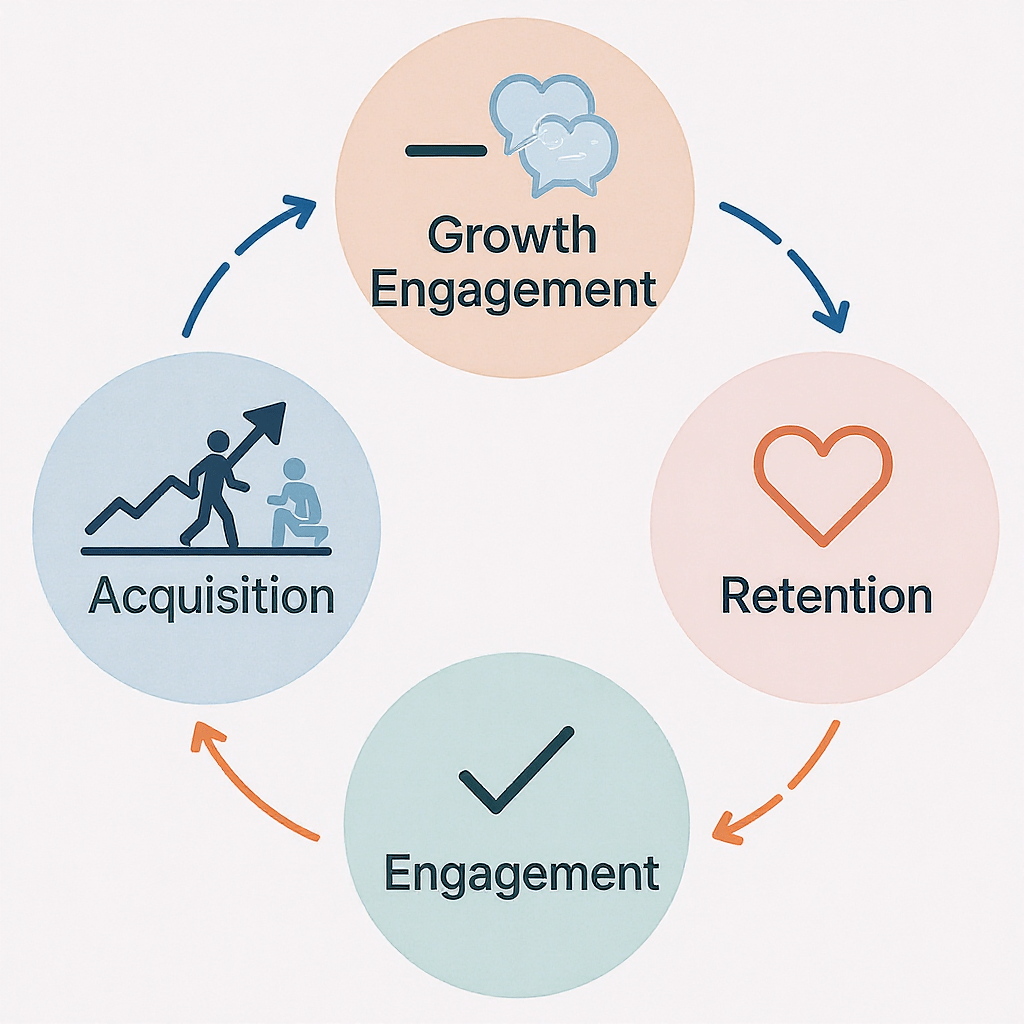
The key insight: We didn’t add growth features later. We baked viral mechanics and habit formation into our core product experience.
Layer 4: User Journeys
Guiding Customers to Success
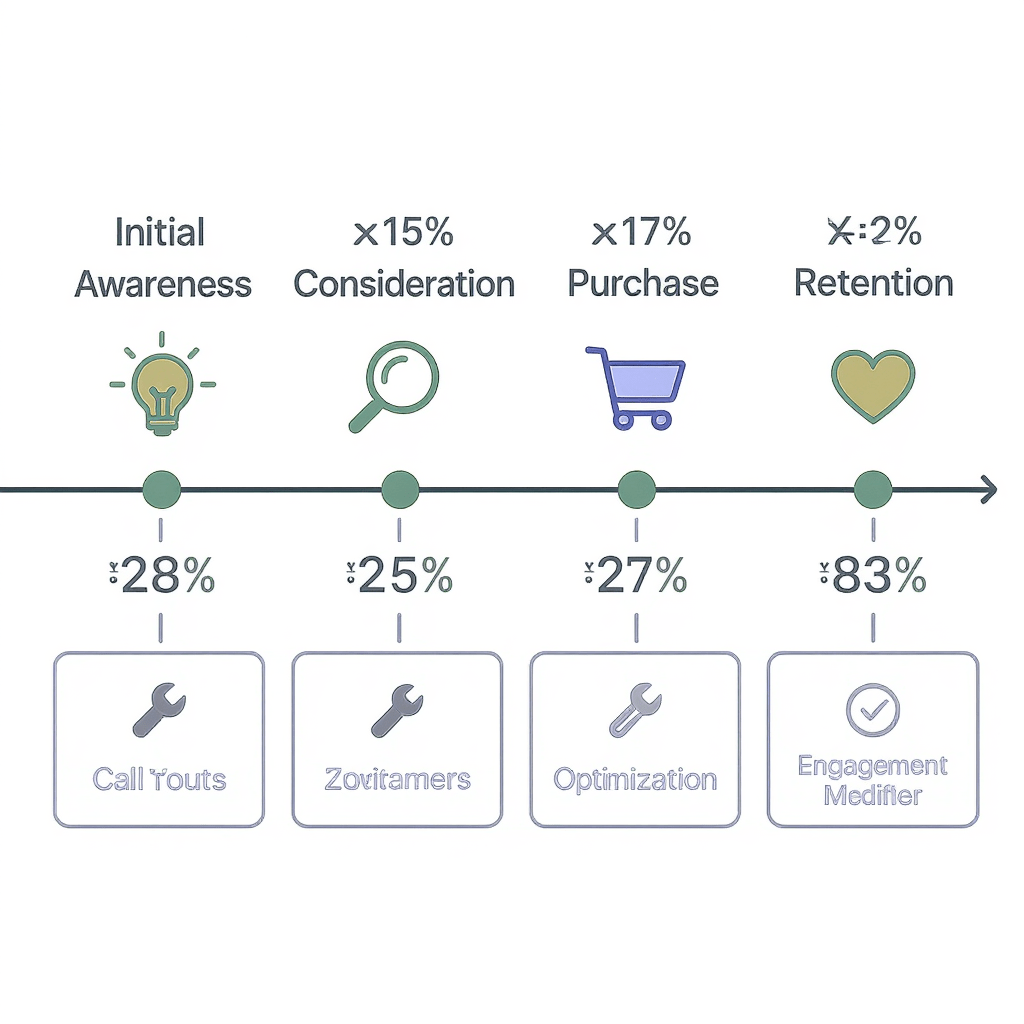
Every customer journey tells a story with a beginning (discovery), middle (activation), and end (mastery).
We mapped three critical journeys:
The Onboarding Journey:
- Day 1: Welcome box arrives with “starter spices” and a simple recipe
- Day 3: Follow-up email with cooking tips and a short video
- Day 7: Check-in to see how the first recipe went
- Day 14: Introduction to the app and spice tracking features
The Monthly Journey:
- Box preview email 5 days before shipping
- Shipping notification with tracking
- Arrival email with recipes and origin stories
- Mid-month check-in with additional recipe ideas
- Feedback survey 3 weeks after delivery
The Mastery Journey:
- Progressive difficulty in recipes and techniques
- Regional deep-dives after customers showed interest
- Access to exclusive “advanced” spice varieties
- Community features for sharing creations
We obsessively tracked drop-off points. When we noticed 30% of customers weren’t opening their second box’s recipe cards, we switched to NFC and QR codes that linked to video tutorials. Engagement jumped to 78%.
Layer 5: UI & Technology
Where Experience Comes to Life
This is where your strategy becomes tangible—and where poor execution kills even brilliant ideas.
Our technology decisions were guided by our strategy:
Freshness First = Smart Tracking: We developed NFC & QR codes linked to batch dates, origin information, and optimal usage windows. Customers could scan any spice and instantly know its story and freshness.
Journey Positioning = Immersive Content: Our app didn’t just store recipes—it created guided cooking experiences with step-by-step photos, timing alerts, and technique videos.
Growth Loops = Social Integration: Easy sharing features for dishes, progress tracking, and gift recommendations were built into every screen.
We learned the hard way that in food, trust is everything. Our first app version had a confusing navigation structure. Customers couldn’t find recipes quickly, leading to abandoned cooking sessions and churn. We redesigned around the principle: “Get from spice to cooking in under 30 seconds.”
Behind the scenes, we prioritized:
- Reliability: Food delivery can’t have downtime during dinner prep
- Speed: Recipe loading had to be instant (our 3-second rule)
- Simplicity: If customers needed the manual, we’d failed
Layer 6: Product Marketing
Translating Features into Feelings
This layer transforms how your product talks to the world. If UI is how your product feels, product marketing is how it communicates value.
We rewrote our entire messaging after realizing we were speaking in features, not benefits:
Before: “Ethically sourced, small-batch spices with traceability and freshness tracking”
After: “Finally, spices that make your cooking taste like your favorite restaurant (without the $40 bill)”
Our messaging hierarchy:
- Primary Promise: “Transform ordinary meals into extraordinary experiences”
- Proof Points: Fresh spices, expert curation, foolproof recipes
- Emotional Payoff: “Become the cook your family and friends rave about”
We A/B tested every piece of copy:
- Email subject lines (winner: “Your Mumbai adventure arrives Tuesday” vs “Your spice box ships soon”)
- Landing page headlines (winner: “Stop settling for boring dinners” vs “Premium spices delivered monthly”)
- Onboarding copy (winner: “Let’s start your flavor journey” vs “Complete your profile”)
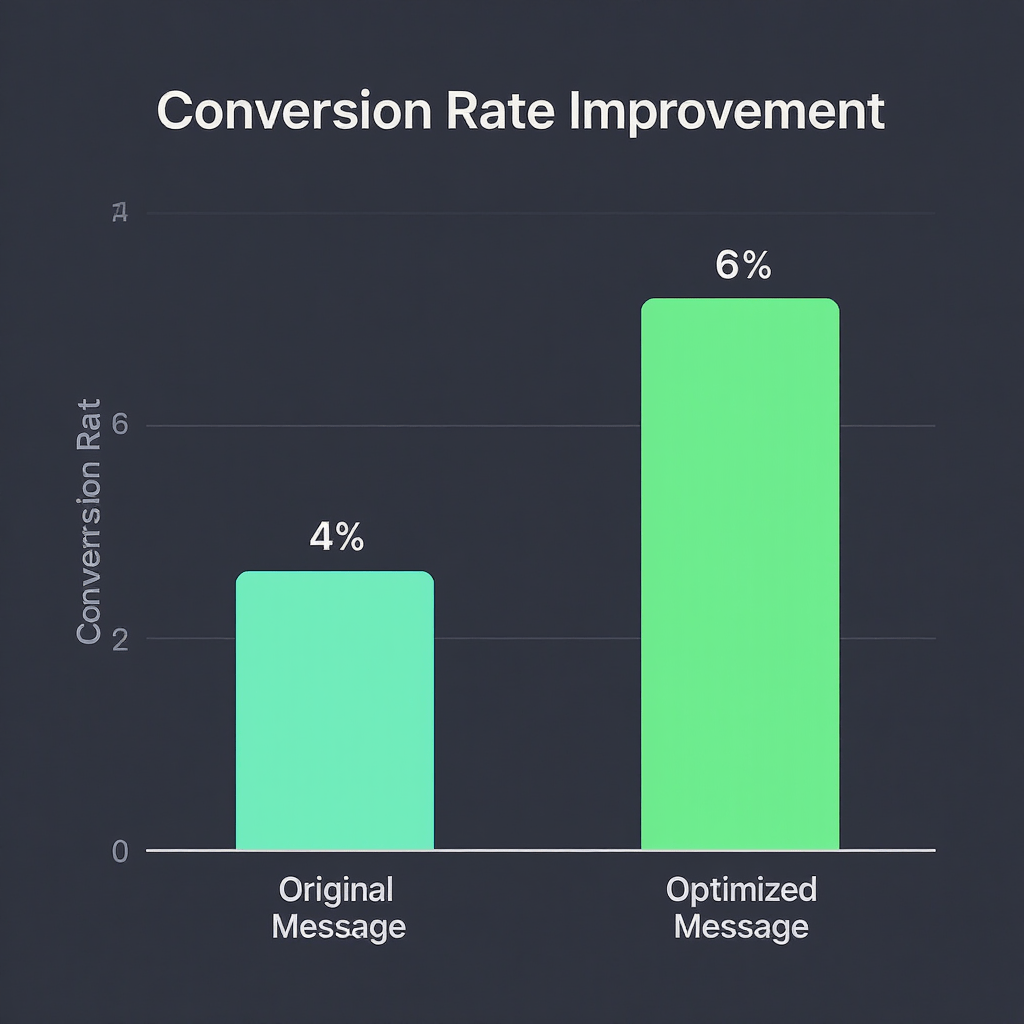
The breakthrough came when we started talking about outcomes, not ingredients. Customers didn’t want cardamom—they wanted to recreate that incredible Indian dish they’d had on vacation.
Layer 7: Marketing & Sales
The Natural Extension of Everything Before
By the time we reached this outer layer, our go-to-market engine practically built itself.
Our marketing flowed naturally from our inner layers:
Content Marketing: Recipe blogs featuring each month’s spices, technique videos, and farmer spotlights aligned perfectly with our “journey” positioning.
Influencer Partnerships: We collaborated with travel bloggers and home cooks who embodied our “culinary adventure” brand, not just food influencers.
Paid Acquisition: Our ads focused on the transformation (“Dinner party hero in 30 minutes”) rather than the product (“Monthly spice subscription”).
Retention Marketing: Our email sequences told stories—following spices from farm to table, sharing cooking successes from our community, and building anticipation for upcoming regions.
The magic happened when sales conversations became consultations. Our customer success team wasn’t pushing products—they were helping customers plan their culinary journeys. “Based on what you loved about Thai cuisine, you’re going to be obsessed with our upcoming Indonesian box…”
Results after aligning all seven layers:
- Customer acquisition cost dropped 60%
- Lifetime value increased 180%
- Net Promoter Score hit 73
- Retention rate improved to 85%
Putting It All Together: The Alignment Effect
Here’s what we learned: When all seven layers are aligned, the compound effect is extraordinary.
Before the Product Onion:
- We were solving unclear problems
- Our messaging was confusing
- Growth was expensive and unsustainable
- Customers churned because they didn’t see value
After the Product Onion:
- Every feature reinforced our core value
- Marketing felt natural, not forced
- Customers became advocates
- Growth accelerated while acquisition costs dropped
The framework didn’t just help us build a better product—it helped us build a coherent business where every piece strengthened every other piece.
How to Apply the Product Onion to Your Business
1. Start with a Layer Audit Print out the framework (seriously). Map your current business to each layer. Where are you strong? Where are there gaps? Where are layers working against each other?
2. Fix from the Inside Out Resist the urge to jump to marketing if your core customer problem isn’t crystal clear. Each layer builds on the last—you can’t skip ahead.
3. Use It as a Team Alignment Tool Different departments see different layers. Sales lives in Layer 7, Product in Layers 4-5, Marketing in Layer 6. Getting everyone looking at the same framework creates shared language and priorities.
4. Make It Your Launch Checklist Before releasing anything significant, ask: “Is each layer strong enough to support what we’re building?”
5. Audit Quarterly Every three months, revisit each layer. What’s changed? What needs reinforcement? What’s working better than expected?
The Onion Never Stops Growing
The Product Onion isn’t a one-time exercise—it’s an ongoing framework for growth.
What started as our core customer pain (stale spices) evolved as we better understood our market. Our growth loops matured. Our technology got smarter. Our messaging got sharper.
The key is maintaining that solid core while thoughtfully strengthening each layer.
Today, we’re experimenting with Layer 3 improvements (AI-powered meal planning based on spice inventory) and Layer 6 optimizations (personalized cooking challenges). But we always ask: “Does this reinforce our core, or distract from it?”
Your Turn to Start Growing
Whether you’re building a subscription business, a SaaS platform, or a local service, the Product Onion can help you grow from the inside out.
Start with pain. Real, validated, urgent customer pain. Then build each layer to reinforce that core value.
Remember: Great products aren’t loud. They’re layered.
What’s at the center of your product onion? Share the core customer pain you’re solving in the comments—we’d love to help you think through your layers.
Download our Product Onion Template:

 The Product Manager's Journal
Leave a comment