We are so close to finishing our product requirements. We have a few important topics to cover before we wrap up the requirements phase and present our recommendation to Product Council.
In the exciting world of product development, we often focus on the features we’re building, the user experience we’re crafting, and the technology stack we’re implementing. But there’s a critical element that sometimes gets overlooked until it’s too late: integration requirements.
Why Integration Requirements Matter
Think of your product as a house. While you might spend hours picking the perfect paint colors and furniture, it’s the electrical, plumbing, and HVAC systems that make the house truly livable. Similarly, your product’s integrations with external systems are what bring it to life in the modern digital ecosystem.
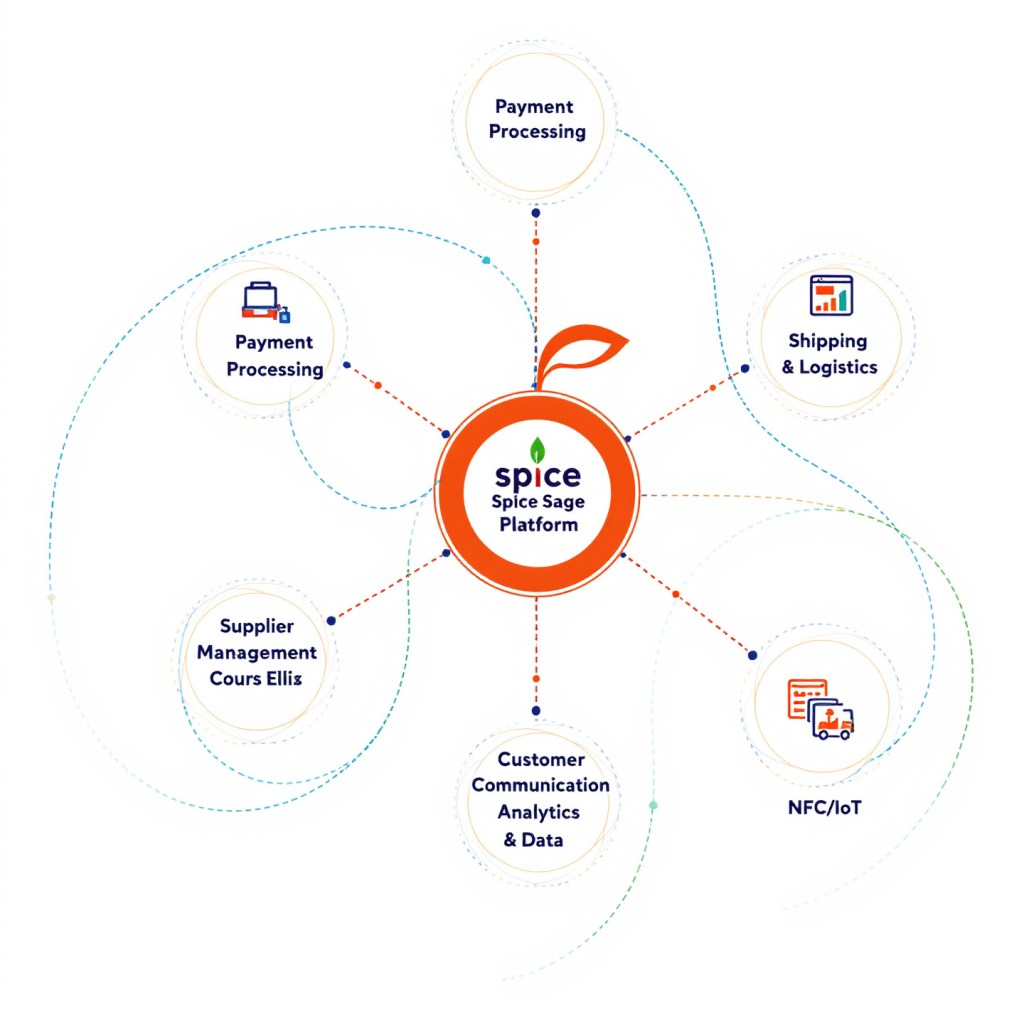
At Spice Sage, we learned this lesson early. Our subscription-based spice delivery service might seem straightforward on the surface, but beneath that simple concept lies a web of critical integrations:
- Payment processors to handle subscriptions
- Shipping providers to deliver products
- Email and SMS services for customer communications
- Analytics platforms to measure performance
- Supplier management systems for inventory
- NFC technology partners for our smart packaging
Without these connections, our beautiful product would be an island – isolated and unable to function in the real world.
The Three Types of Integration Requirements

When planning your product, consider these three integration categories:
1. Technical Integrations
These are the nuts and bolts of how your systems talk to external services. For Spice Sage, this includes:
- API specifications for payment gateways
- Authentication protocols for secure data exchange
- Data formats and schemas for consistent communication
- Error handling procedures when things go wrong
- Rate limiting considerations to prevent overloading
Real-world example: We initially underestimated the complexity of integrating with shipping providers. Each carrier had different API structures, authentication methods, and data requirements. By documenting these technical requirements upfront, we saved countless hours of development rework later.
2. Business Process Integrations
These integrations focus on how your operational workflows connect with external partners and services.
- Order fulfillment processes with warehouse systems
- Subscription billing cycles with payment processors
- Customer service ticketing with support platforms
- Inventory management with supplier systems
- Reporting and compliance with regulatory systems
Real-world example: Our subscription management system needed to coordinate perfectly with both our payment processor and our fulfillment center. When a customer changes their delivery date, this information must cascade through multiple systems in the correct sequence.
3. Data Integrations
These requirements define how information flows between systems and how it’s transformed along the way.
- Data mapping between different systems
- Transformation rules for inconsistent formats
- Validation procedures to ensure data quality
- Synchronization frequency (real-time vs. batch)
- Historical data migration plans
Real-world example: Our recommendation engine needed to pull data from multiple sources – customer preferences, inventory availability, and supplier information. Each source had different data structures that required careful mapping and transformation.
The “Build vs. Integrate” Decision

One of the most crucial decisions in product development is determining what to build in-house and what to integrate from external providers. This decision impacts everything from development timelines to ongoing maintenance costs.
At Spice Sage, we followed a simple framework:
- Core competencies: Build in-house (our spice curation algorithms, taste profile system)
- Commodity services: Integrate with specialists (payment processing, email delivery)
- Hybrid approach: Build customization layers on top of existing platforms (our inventory system built on standard warehouse management APIs)
This approach allowed us to focus our development resources on what makes our product unique while leveraging reliable external systems for everything else.
Documenting Integration Requirements Effectively
Integration requirements deserve the same detailed attention as your core feature requirements. Here’s what comprehensive integration documentation should include:
- System interface diagrams showing all connection points
- Data flow mappings with transformation rules
- Authentication and security protocols
- Performance expectations (response times, throughput)
- Error handling procedures and fallback mechanisms
- Testing strategies specific to integrations
- Service level agreements (SLAs) and dependencies
The Evolution of Integration Requirements
Integration requirements aren’t static – they evolve as your product grows and as your integration partners update their systems. At Spice Sage, we learned to:
- Monitor for changes: Set up alerts for API deprecation notices and partner updates
- Build flexibility: Design integration layers that can adapt to changes
- Maintain relationships: Establish communication channels with key integration partners
- Plan for contingencies: Identify backup providers for critical services
- Review regularly: Schedule quarterly reviews of integration performance and requirements
Case Study: Our Payment Processing Integration
When we first launched Spice Sage, we integrated with a popular payment processor using their standard API. Our initial requirements were simple:
- Process credit card payments
- Handle subscription billing
- Manage payment failures
But as we grew, our needs became more complex:
- Support for multiple currencies as we expanded internationally
- Sophisticated retry logic for failed payments to reduce churn
- Detailed reporting for financial compliance
- Custom payment plans for special promotions
- Split payments between us and our supplier partners
By anticipating these evolving needs in our initial integration requirements, we built a payment integration layer that could grow with us, rather than requiring a complete overhaul later.
Integration Requirements in Agile Development
Integrations present a unique challenge in agile development. They often require coordination with external timelines and processes that don’t fit neatly into your sprint cycles.
Here’s how we handle integration requirements in our agile process:
- Early discovery: Identify integration needs during initial product planning
- Dedicated stories: Create specific user stories for integration points
- Mock interfaces: Build against mock APIs before real integration begins
- Integration buffers: Add time buffers for external dependencies
- Phased approach: Start with minimal viable integrations and iterate
Conclusion: Integrations as Opportunities
While integration requirements add complexity to product development, they also create opportunities. Each integration point is a chance to extend your product’s capabilities, reach new users, and create more value.
At Spice Sage, some of our most innovative features came from creative uses of our integration points:
- Our AR spice origin stories leverage our supply chain tracking integrations
- Our personalized recipe recommendations combine data from multiple sources
- Our freshness tracking system connects our packaging technology with our mobile app
The next time you’re planning a product, remember that it doesn’t exist in isolation. It’s part of an ecosystem, and those connection points deserve as much attention as the product itself. By treating integration requirements with the care they deserve, you’ll build something that doesn’t just work well internally, but thrives in the interconnected digital world.
About the Author: Dan Blizinski is the founder and CEO of Spice Sage, a technology-enabled subscription platform delivering premium, small-batch spices directly to modern home cooks.

 The Product Manager's Journal
Leave a comment